
Faro Public Transport Guide: 8 Essential Ways to Get Around
Master Faro public transport with our guide to airport buses, regional trains, Vamus bus routes, and local city transport for a seamless Algarve trip.
 By Marco Bellini
On this page
Faro Public Transport Guide: 8 Essential Ways to Get Around
Quick answer for 2026: from Faro Airport, take Próximo bus Route 16 (the "pink line") into the city for €2.25 — it runs every 15 minutes in summer and reaches the train and bus stations in about 20 minutes. Inside Faro, almost everything is walkable: the train and bus terminals sit on Avenida da República, a 5-minute walk apart and roughly 14 minutes from the Old Town. To reach the rest of the Algarve, use Vamus regional buses or the CP Linha do Algarve train; to reach Lisbon, take the Intercidades or Alfa Pendular train (about 3 hours, from ~€24).
This guide breaks down every Faro public transport option — airport transfers, the local Próximo network, regional Vamus buses, the coastal railway, intercity links to Lisbon, and the Ria Formosa ferries — with current fares, line numbers, and ticketing apps. Skip car rental: for the Old Town, the islands, and day trips to Tavira or Lagos, the buses, trains, and ferries below do the job for a fraction of the cost.
Free: The European City Transport Cheat Sheet
Airport-to-centre, the best ticket to buy, and the one local gotcha — for 5 European cities, plus the universal rules for trams, ferries, and parking.
Travel options from Faro Airport to the City Center
The journey from Faro Airport (FAO) to the city center is short, covering roughly seven kilometers. Próximo Bus 16 (the "pink line") is the most frequent option: in summer it departs every 15 minutes between 7:30am and 8pm, dropping to roughly every 30 minutes at weekends and in the low season, with first and last departures around 05:20am and 00:10am. A single ticket costs €2.25 bought directly from the driver in cash. One catch — if the front display reads "Praia de Faro", that bus is heading to the beach, not the city center, so wait for the one signed toward the terminal. Check the Portugal airports guide for real-time terminal maps and facility updates.

Taxis and ride-sharing services like Uber offer door-to-door convenience for those with heavy luggage. A typical taxi fare to the Faro marina or bus station ranges between €12 and €18 depending on the time. Uber often provides a slightly cheaper alternative, though prices fluctuate during peak summer months. Most rides take less than 15 minutes to reach the heart of the city.
Budget-conscious travelers might also consider Bus 14, though it runs less frequently than the 16 line. Both buses terminate at the Proximo bus station, which is conveniently located near the train station. Walking is generally not recommended due to the lack of continuous pedestrian paths and the intense heat. Always verify the latest departure times on the Algarve bus information portal before landing.
- Airport Transport Comparison
- Option: Bus 16 (Próximo)
- Cost: €2.25
- Time: 20 minutes
- Best for: Solo travelers
- Private Transit Options
- Option: Taxi/Uber
- Cost: €12-€18
- Time: 12 minutes
- Best for: Groups/Families
| Option | Fare (2026) | Journey time | Payment | Best for |
|---|---|---|---|---|
| Próximo Bus 16 (airport ↔ city) | €2.25 | ~20 min | Cash to driver | Solo / budget travelers |
| Próximo local bus (within Faro) | €1.10 | 5–15 min | Cash or Próximo card | University / Forum Algarve mall |
| Taxi / Uber / Bolt | €12–€18 | ~12 min | Card or app | Groups / heavy luggage |
| Vamus regional bus (e.g. Tavira) | from ~€2.30 | 45 min–1 h 20 | Cash or station window | Coastal day trips |
| CP train Faro→Lisbon | from ~€24 | ~3 h 30 | App / counter (seat reserved) | Intercity travel |
Regional Public Transport in the Algarve
Faro acts as the central hub for the Vamus Algarve bus network, which connects the entire southern coast. This regional system is ideal for reaching smaller villages that are not served by the railway. Routes extend eastward toward the Spanish border and westward toward the rugged cliffs of Sagres. Travelers can find detailed route maps and seasonal changes on the Vamus Algarve Official Site.
The Vamus network operates out of the main bus terminal, known locally as the Terminal Rodoviário. It is situated on Avenida da República, just a short walk from the Faro marina. Buying tickets in advance at the station windows is recommended during the busy summer season. Many regional buses now offer free Wi-Fi and air conditioning for a more comfortable journey.
Navigating the regional network requires some patience as frequencies can drop significantly on weekends. Planning your return trip is vital to avoid being stranded in smaller coastal towns after sunset. Consulting a public transport guide can help you understand general Portuguese transit etiquette. Most drivers speak basic English, but having your destination written down is always helpful.
Navigating Faro by Local Bus (Próximo)
The Próximo bus system is Faro's dedicated urban network, designed for navigating the city's neighborhoods. While the city center is walkable, these buses are essential for reaching the University or the Forum Algarve mall. There are currently nine main lines that circulate throughout the urban and suburban zones. The Linha 16 is particularly useful as it connects the city, the airport, and the Praia de Faro beach.
Local tickets are quite affordable, usually priced around €1.10 for a single urban journey. Frequent users should consider the rechargeable 'Próximo' card to save money on multiple trips. You can find these cards at the main ticket office located within the central bus station. Drivers expect passengers to enter through the front door and exit through the middle or rear.
Sightseeing via the local bus allows you to see residential areas often missed by tourists. The buses are generally clean and run on a reliable schedule during weekdays. Electronic displays at major stops provide real-time information on the next arriving vehicle. This system is similar in efficiency to the Reims public transport network in France.
The Last Mile: Station to Old Town and Beach
One detail most guides skip: once you arrive at Faro's transport hubs, you almost never need another ticket. The train station and the Vamus bus terminal both sit on Avenida da República, less than a 5-minute walk apart. From the bus station, turn right on exit and it is only about 150 metres to the marina (Jardim Manuel Bívar) and the edge of the historic centre. The Old Town gate, the Arco da Vila, is roughly a 14-minute flat walk from the train station — no transfer required.
The one place worth a bus rather than your feet is Praia de Faro, the city beach out on the barrier island. Próximo Line 16 connects the city center directly to the beach for the standard €1.10 urban fare, so you can ride the same line that brought you in from the airport straight out to the sand. For the Ria Formosa islands proper (Ilha Deserta, Ilha do Farol), use the ferries from the Arco da Vila pier covered below rather than a bus.
- Train/bus stations → marina: ~150 m (2-min walk)
- Train station → Old Town (Arco da Vila): ~14-min walk
- Train station → bus terminal: under 5-min walk on Avenida da República
- City center → Praia de Faro: Próximo Line 16, ~€1.10
For regional day trips, the fastest planning shortcut is to memorise two corridors. Eastbound, Faro to Tavira takes about 45 minutes to 1 hour by Vamus bus (frequent, from roughly €2.30). Westbound, Faro to Lagos is the longest coastal hop at about 1 hour 20 minutes by bus; the train is often the comfier choice on that route. On both corridors frequencies thin out sharply on Sundays and public holidays, so plan the return leg before you set off.
Traveling by Train: The Algarve Regional Line
The Linha do Algarve is a scenic railway that stretches from Vila Real de Santo António to Lagos. Faro Train Station is the most important stop on this line, located west of the city center. Regional trains are slower than express services but offer beautiful views of the salt marshes and orchards. You can check the latest schedules and buy tickets on the Comboios de Portugal (CP) Official Site.
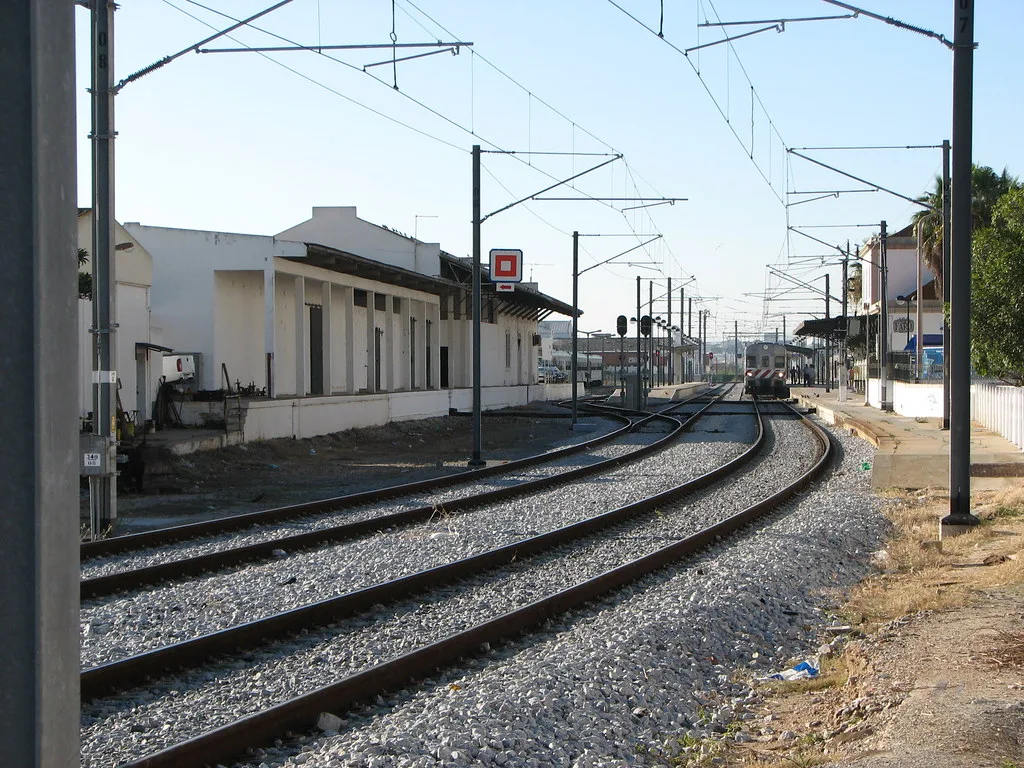
Tickets for regional trains cannot be reserved in advance and do not sell out. Simply arrive at the station 15 minutes early to purchase your ticket from the machine or counter. Remember to validate your ticket at the yellow or green machines before boarding the train. Failure to validate can result in a heavy fine if an inspector checks your carriage.
Traveling by rail is often faster than the bus for long-distance coastal trips. For example, the journey from Faro to Lagos takes about 1 hour and 45 minutes by train. The trains are older but charming, featuring large windows perfect for photography. This rail experience is comparable to the local connections found in Bari public transport systems.
Intercity Travel: Faro to Lisbon and Beyond
Traveling from Faro to Lisbon is most efficiently done by train, with two CP services on the route. The Alfa Pendular is the faster, more comfortable option, while the Intercidades (Intercity) train is marginally slower but cheaper; in practice both take around 3 hours 30 minutes and a standard fare sits near €24. Both terminate at Lisbon's Oriente station and require a seat reservation, so book ahead — promo fares released a few weeks out can cut the price sharply. Trains run roughly five times a day, so check times before committing.
Flying between Faro and Lisbon is an option, but it is rarely faster when considering airport security. The train takes you directly from Faro city center to Lisbon's Oriente station. Oriente is a major transport hub, making it easy to continue your journey elsewhere in Portugal. Most travelers find the rail journey more relaxing than navigating the airport process again.
Booking early via the CP app can save you up to 50% on long-distance fares. Look for 'Promo' tickets which are released several weeks before the departure date. The trains offer power outlets and a cafeteria car for snacks and drinks during the trip. This connection is as vital to Portugal as the links described in the Zaragoza public transport guide are to Spain.
Bus Services: Vamus, Rede Expressos, and Renex
For those traveling beyond the Algarve, Rede Expressos is the primary national coach operator. Their modern buses connect Faro to major cities like Porto, Coimbra, and Seville in Spain. Renex is another reliable brand under the same corporate umbrella offering similar long-distance routes. Tickets can be purchased online or via their mobile app to ensure a guaranteed seat.
The Vamus Algarve Tourist Pass is a hidden gem for visitors planning extensive regional travel. It offers unlimited travel on regional buses for 1, 3, or 7 consecutive days. A 3-day pass costs approximately €35, which pays for itself if you visit two or three distant towns. This pass is particularly useful for reaching the western Algarve where train tracks do not exist.
Bus stations in the Algarve are generally safe and well-maintained for international travelers. Most terminals offer luggage lockers if you wish to explore a town during a layover. Be aware that long-distance buses depart from specific bays, so check the digital boards carefully. This coach network provides a level of coverage similar to the Dijon public transport bus system.
Practical Tips: Tickets, Apps, and Timetables
Digital tools make navigating Faro public transport significantly easier for modern travelers. The CP (Comboios de Portugal) app is essential for checking train times and purchasing mobile tickets. Vamus also provides a website with a trip planner that integrates various regional bus routes. Google Maps is generally reliable for city bus times but may lag on regional updates.
Cash is still king for small purchases on local Próximo buses and ferries. Keep small denominations of Euros ready, as drivers often cannot change large bills like €20 or €50. Credit cards are widely accepted at train station kiosks and major bus terminal windows. Always keep your physical or digital ticket handy until you have exited the transport area.
Timetables change between the 'High Season' (summer) and 'Low Season' (winter) months. Frequencies for beach-bound buses like the 16 increase significantly during July and August. Always double-check the 'Sábados, Domingos e Feriados' (Saturdays, Sundays, and Holidays) columns. Using these apps is as straightforward as the systems mentioned in the Colmar public transport guide.
Alternative Transport: Taxis, Uber, and Ferries
Faro is unique because its public transport network extends into the water via the Ria Formosa. Ferries depart from the pier near the Arco da Vila to reach Ilha Deserta and Ilha do Farol. A round-trip ferry ticket to the islands typically costs between €5 and €10 depending on the destination. These boats are the only way to reach some of the most pristine beaches in Portugal.

Taxis are plentiful in Faro and can be hailed on the street or found at designated ranks. They are a reliable option for late-night travel when buses and trains have stopped running. Uber and Bolt are also active in the region and often provide competitive pricing for longer rides. Ensure your phone is charged as ride-sharing relies heavily on GPS and app connectivity.
Cycling is becoming more popular in Faro due to the flat terrain around the city and marina. Shared bike schemes and private rentals allow for a flexible way to see the sights. The Ecovia do Litoral is a dedicated cycling path that runs across the entire Algarve coast. This mix of transport options mirrors the variety seen in Trapani public transport in Sicily.
Frequently Asked Questions
How do I get from Faro Airport to the city center by bus?
You should take Bus 16, which runs frequently between the airport and the main bus station. The journey takes about 20 minutes and costs approximately €2.50. You can buy the ticket directly from the driver using cash. For more details, check the travel blog for updated transit tips.
Is there a train station at Faro Airport?
No, there is no train station directly at Faro Airport. You must take a bus, taxi, or Uber to the Faro Train Station in the city center. The bus ride from the airport to the station takes roughly 20 minutes. From there, you can access the regional and national rail networks.
How much does a bus ticket cost in Faro?
A single journey on the local Próximo city bus costs around €1.10. Regional Vamus bus prices vary depending on the distance traveled, typically ranging from €3 to €15. The airport bus is slightly more expensive at €2.50. Frequent travelers can save money by purchasing multi-day tourist passes.
What is the best way to travel from Faro to Lisbon?
The high-speed Alfa Pendular train is the best option for speed and comfort, taking about three hours. If you are on a tight budget, the Rede Expressos coach service is a reliable and cheaper alternative. Flying is possible but often takes longer when including airport transit times. Always book train tickets in advance for the best rates.
Does Uber work in Faro and the Algarve?
Yes, Uber and Bolt both operate extensively throughout Faro and the wider Algarve region. They are often more affordable than traditional taxis for medium-length trips. Availability is high in the city and near the airport, though it may decrease in remote rural areas. Use the apps to see real-time pricing and driver locations.
Mastering Faro public transport is the key to an affordable and authentic Portuguese adventure. By using the buses, trains, and ferries, you reduce your environmental impact while saving money. The system is logical and well-connected, especially if you download the necessary apps before arriving. Faro serves as a perfect base for exploring the diverse landscapes of the southern coast.
Remember to validate your tickets and keep some small change for the local bus drivers. Whether you are heading to a remote beach or the bustling streets of Lisbon, the transit network is ready. Plan your routes in advance to make the most of your time in this beautiful region. Enjoy the scenic journeys and the ease of traveling through the heart of the Algarve.
Free: The European City Transport Cheat Sheet
Airport-to-centre, the best ticket to buy, and the one local gotcha — for 5 European cities, plus the universal rules for trams, ferries, and parking.
You might also like


Continue reading
More guides you'll find useful