European Tram Maps And Tickets Travel Guide
Plan european tram maps and tickets with top picks, neighborhood context, timing tips, and practical booking advice for a smoother trip.
 By Marco Bellini
On this page
European Tram Maps And Tickets
TL;DR: In most European cities a single tram ticket costs €1.50–€3.00 and is time-limited (Rome 100 min, Prague 90 min, Strasbourg 1 hr). For 2+ days, buy a 24h/72h pass. Pay by tapping a contactless card or phone where available (Rome, Amsterdam, Milan, Prague), or buy from the yellow on-board machine or the city's app. The one rule that costs you money: validate paper/app tickets on the orange machine the moment you board — un-validated tickets draw fines of €40–€500 even when paid for.
Exploring the continent becomes much simpler when you master European tram maps and tickets. Most major cities offer extensive networks that glide past historic landmarks and modern districts. These systems provide a scenic alternative to underground metros while maintaining high frequency.
Understanding the local fare structures is essential for avoiding unexpected fines during your journey. Many cities now utilize contactless payments or mobile apps alongside traditional paper stubs. This guide will help you navigate the various networks from France to Germany with confidence.
Planning your route ahead of time ensures you spend more time sightseeing and less time at kiosks. Reliable network maps and routes are often available at every station or via official transit websites. Let's dive into how you can use these systems to enhance your European adventure.
Free: The European City Transport Cheat Sheet
Airport-to-centre, the best ticket to buy, and the one local gotcha — for 5 European cities, plus the universal rules for trams, ferries, and parking.
Key Takeaways
- Always validate your ticket immediately to avoid steep fines.
- Use 'Park and Ride' lots to save money on city parking.
- Download official transit apps for real-time maps and digital tickets.
- Consider multi-day passes for better value during long stays.
Must-See European Attractions
Many of the most famous landmarks across the continent sit directly on primary tram corridors. In cities like Prague or Vienna, the tram often drops you closer to the entrance than a bus or taxi. These routes are designed to connect residential zones with the vibrant historic centers.
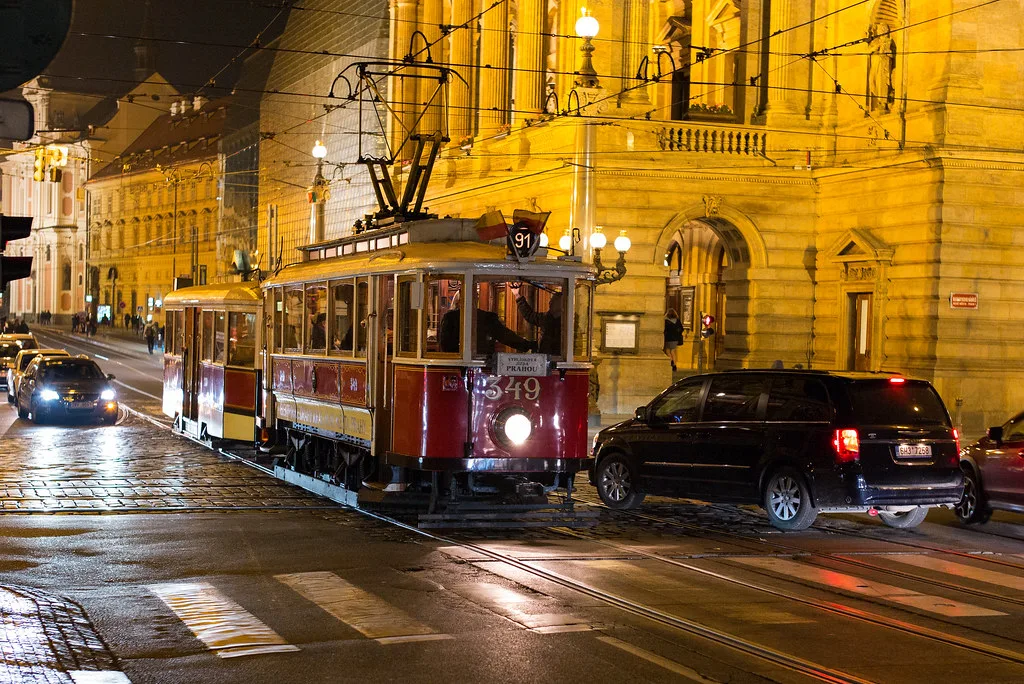
Using a tram allows you to see the city's architecture while moving between famous squares and cathedrals. You can easily reach the getting around Europe hubs by following the main lines marked on local maps. Always look for the 'T' or 'Tram' icons on city signage to find the nearest boarding point.
Travelers often prefer the high-frequency lines that run every six to eight minutes during peak hours. This reliability makes it easy to visit multiple sites in a single afternoon without stress. Check the digital displays at stops for real-time arrival information to stay on schedule.
- Prague Castle via Line 22
- Type: Scenic Route
- Best for: Historic Views
- Where: Prague, Czechia
- Cost: Approx. €1.50
- Vienna Ringstrasse Lines
- Type: Circular Route
- Best for: Grand Architecture
- Where: Vienna, Austria
- Cost: Included in day pass
Museums, Art, and Culture in European Cities
Cultural districts are frequently the heart of urban tram networks, making museum hopping incredibly efficient. You can often find dedicated 'Museum Lines' in cities like Amsterdam or Zurich that cater specifically to tourists. These routes link major galleries, concert halls, and independent art spaces seamlessly.
Purchasing a 24-hour or 48-hour transit pass usually provides the best value for cultural explorers. Many cities offer a combined 'Museum Pass' that includes unlimited tram travel for a set duration. This eliminates the need to buy individual tickets for every short hop between exhibits.
If you are heading to the Strasbourg tram network, you will find it connects the modern Art Museum to the historic Palais Rohan. Such accessibility is common across France, where trams are a point of civic pride. Maps usually highlight these cultural stops with distinct colors or symbols.
Trams: A Scenic Way to Explore European Cities
Trams offer a unique perspective on urban life that underground trains simply cannot provide. Large windows and street-level tracks allow you to observe local neighborhoods as they change from block to block. This makes the journey itself an integral part of your sightseeing experience.
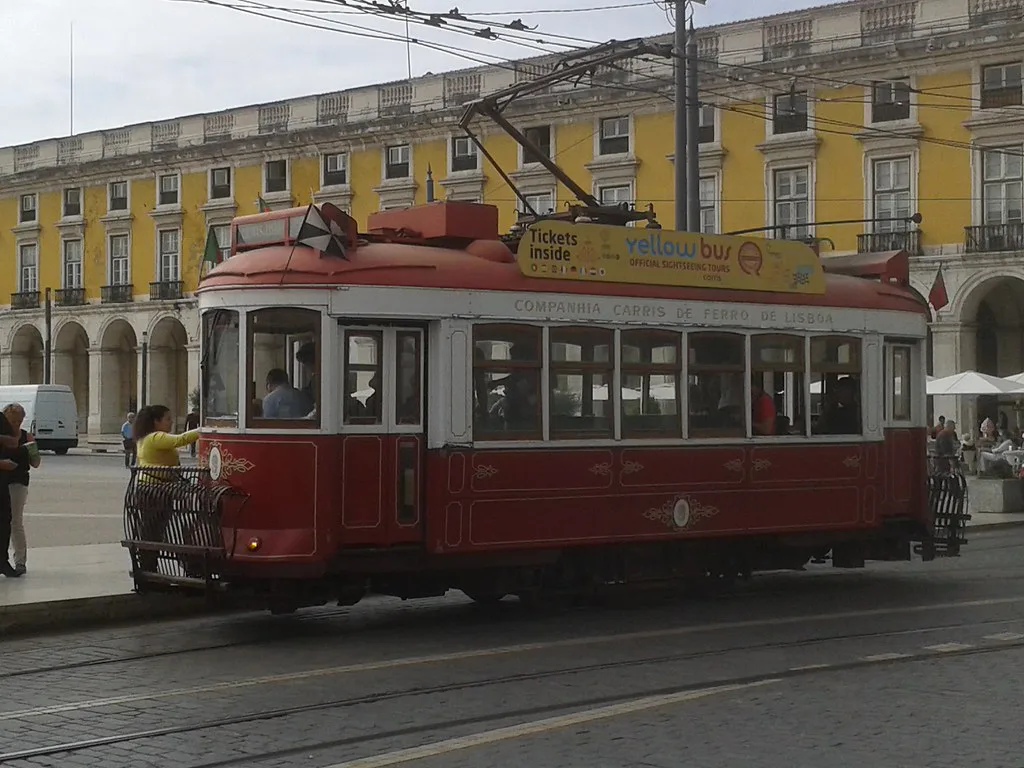
For a specialized experience, look for cities that use heritage cars alongside modern low-floor vehicles. In places like Lisbon, the historic yellow trams tackle steep hills that modern buses struggle to climb. You might also enjoy the Alicante tram, which runs along the beautiful Mediterranean coastline.
Photographers often find the slow pace of city-center trams ideal for capturing street scenes. Try to grab a seat at the very back of the car for an unobstructed view of the tracks receding behind you. This vantage point offers a cinematic look at the city's bustling thoroughfares and quiet side streets.
- Lisbon Line 28
- Type: Vintage Tram
- Best for: Steep Hills
- Where: Lisbon, Portugal
- Cost: €3.00 onboard
- Dijon Cultural Route
- Type: Modern Light Rail
- Best for: Clean Design
- Where: Dijon, France
- Cost: €1.70 per trip
Getting around Strasbourg and suburbs
Strasbourg features one of the most advanced tram systems in the world, stretching even across international borders. Line D is particularly famous for crossing the Rhine River into Kehl, Germany. This makes it possible to change countries for the price of a standard local ticket.
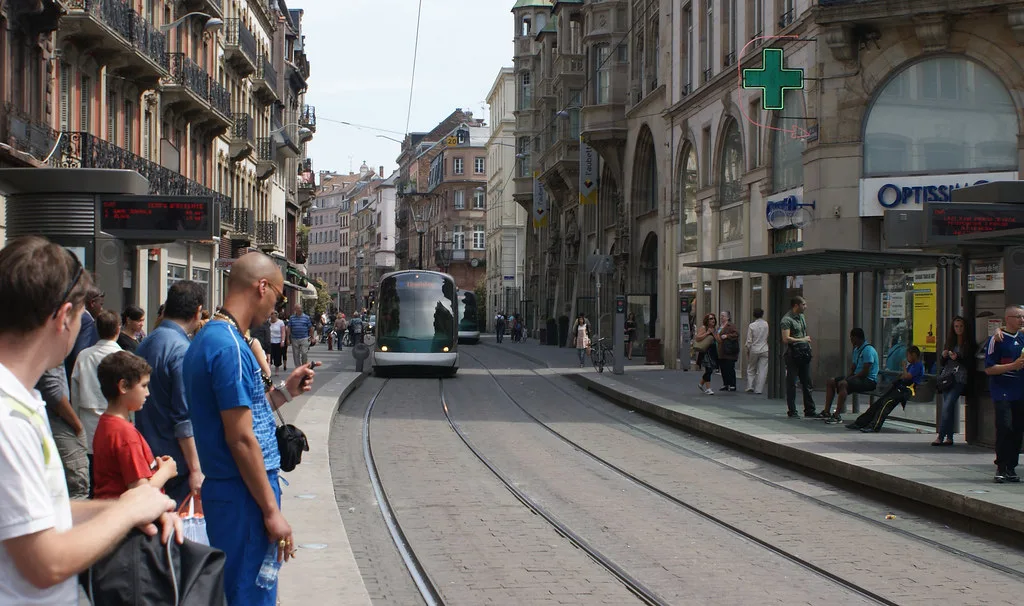
The network uses a 'Park and Ride' (P+R) system that is highly recommended for those arriving by car. You can park at the city outskirts and receive a round-trip tram ticket for all passengers in your vehicle. This strategy saves money on expensive city-center parking and avoids heavy traffic zones.
Navigating the suburbs is simple if you understand the zone-based maps found at every station. Most tourist attractions are within Zone A, but the airport and further reaches require a different fare tier. Always check the 'Vous êtes ici' (You are here) maps to orient yourself before boarding.
Navigating Europe’s Metro Systems
While trams are excellent for short distances, metro systems are the better choice for crossing entire cities quickly. Metros generally run deeper underground and have fewer stops than their surface-level counterparts. Many European cities integrate both systems into a single unified ticket for maximum convenience.
Transferring between a tram and a metro usually requires passing through a turnstile or re-validating your ticket. Look for the 'M' symbol to find underground entrances near major tram interchanges. In cities with the Padua tram map, the connection points are clearly marked to help travelers switch modes.
Metros are less scenic but operate regardless of street traffic or weather conditions. If you are in a rush to reach a train station or airport, the metro is almost always the faster option. However, for a relaxed tour of the city, the tram remains the superior choice for most visitors.
Essential Tips for Using Public Transport in Europe
The most critical rule for European transport is to validate your ticket before or immediately after boarding. Failure to do so can result in heavy fines, even if you have a valid, paid ticket in your hand. Look for small yellow or orange machines on the platform or inside the tram car.
Downloading the local transit app is the easiest way to manage your European tram maps and tickets in 2026. These apps often provide live updates on delays and allow for quick digital purchases. You can also find helpful guides on the hopwander blog for various regional networks.
Keep your ticket until you have completely exited the station or stepped off the tram. Plainclothes inspectors frequently conduct random checks and will ask to see your validated fare. Being polite and having your ticket ready makes these brief encounters go much smoother for everyone involved.
How to Buy and Validate Tram Tickets by City (2026 Fares)
The single biggest source of fines is paying correctly but validating wrong, and the rules differ in every city. The table below covers the four payment patterns you will meet across Europe in 2026: tap-to-pay (the card itself is your ticket, no separate validation), on-board machines, app tickets, and old-school paper that must be stamped. Match the city to its rule before you board.
| City | Single fare (2026) | How to pay | Validation rule | Fine if unvalidated |
|---|---|---|---|---|
| Rome (ATAC) | BIT €1.50, valid 100 min | Tap Visa/Mastercard/Apple Pay/Google Pay on the red Tap&Go reader, or buy a BIT paper ticket | Tap&Go needs no validation; paper BIT must be stamped in the orange box on boarding | €100–€500 + fare |
| Prague (DPP/PID) | CZK 40 (~€1.60), valid 90 min | Yellow on-tram machine (contactless card or coins), PID Lítačka app, or tap card on the validator | Stamp paper tickets in the yellow machine on boarding; app/contactless are pre-validated | CZK 1,500 (~€60) |
| Strasbourg (CTS) | €1.90 single (24h pass €4.60) | Machine at the stop, the CTS app, or tap a contactless card on the platform reader | No on-board validation — your ticket is valid from purchase; keep it for inspectors | €50+ surcharge |
| Amsterdam (GVB) | €3.40 single, valid 1 hr | OVpay: tap a contactless bank card/phone, or buy a GVB ticket/app QR | Tap in on boarding AND tap out when you exit — both are required | ~€50 + fare |
| Vienna (Wiener Linien) | €2.40 single (24h €8.00) | WienMobil app, machines, or tobacconists; single trips included in any day pass | Stamp single paper/printed tickets in the blue box before your first ride only | €115 |
Three habits cover almost every network. First, if the city has tap-to-pay (Rome, Amsterdam, Milan, increasingly Prague), the card you tapped is your proof — never also buy a paper ticket for the same trip. Second, if you hold paper or an app QR, find the orange/yellow/blue box and stamp it the second you step aboard, before you find a seat. Third, on zonal or cross-border lines such as Strasbourg's Line D into Kehl, Germany, a standard city ticket still covers you, but airport and outer-zone trips need a higher fare tier — check the zone map at the stop before boarding.
Frequently Asked Questions
Which European tram maps and tickets options fit first-time visitors?
First-time visitors should look for 24-hour or 72-hour unlimited passes. These options eliminate the stress of buying individual tickets for every trip. Most cities offer these via mobile apps or kiosks at major stations like the Reims tram network hubs.
How much time should you plan for European tram maps and tickets?
Allow at least 15 minutes to study the map and purchase your first ticket at a kiosk. Once you have a pass, tram travel is very efficient with most wait times under 10 minutes. Budget extra time during rush hour for crowded cars.
What should travelers avoid when planning European tram maps and tickets?
Avoid boarding without a validated ticket, as 'fare dodging' carries high penalties across Europe. Do not assume all trams take cash; many modern systems require cards or apps. Also, avoid standing in the way of doors during busy commutes.
Mastering the local tram system is one of the best ways to feel like a local while traveling. Whether you are using the Grenoble tram or exploring the streets of Berlin, these networks offer reliability and charm. With a little preparation, you can navigate any European city with ease.
Always remember to keep a digital copy of the network map on your phone for offline use. This ensures you can find your way back to your hotel even without a steady data connection. Enjoy the view from the window as you glide through some of the world's most beautiful cities.
Trams represent the perfect blend of history and modern efficiency for the savvy traveler. By following the tips in this guide, your next trip will be smoother and more enjoyable. Start planning your routes today and discover the magic of European rail travel.
Explore Every Guide
All 11 guides in this collection, kept current for 2026.
- Alicante tram routes and tickets
- Angers tram and public transport
- Clermont-Ferrand tram and bus tickets
- Dijon tram map and tickets
- Grenoble tram map
- Lisbon Tram 28 route map
- Montpellier tram stops for attractions
- Opicina tram ride Trieste
- Padua tram map and tickets
- Reims tram map and tickets
- Strasbourg tram how to use it
Free: The European City Transport Cheat Sheet
Airport-to-centre, the best ticket to buy, and the one local gotcha — for 5 European cities, plus the universal rules for trams, ferries, and parking.
You might also like


Continue reading
More guides you'll find useful