Athens Metro Map And Tickets Travel Guide
Plan Athens metro map and tickets with top picks, neighborhood context, timing tips, and practical booking advice for a smoother trip.
 By Marco Bellini
On this page
Athens Metro Map And Tickets
Quick answer (2026): The Athens Metro has three lines (M1 Green, M2 Red, M3 Blue) and 66 stations linking the airport, Piraeus port and the city centre. A standard ticket is €1.20 for 90 minutes of unlimited transfers on metro, bus, tram and trolleybus; a 24-hour pass is €4.10. The airport is the one exception — a one-way metro ticket there costs €9.00. Easiest way to pay in 2026: just tap a contactless bank card or phone (Apple Pay / Google Pay) at the gate via Tap2Ride; no card or kiosk needed.
For sightseeing, Acropolis (M2) drops you at the Parthenon, Monastiraki (M1 + M3) at the flea market, and Syntagma (M2 + M3) at the central interchange. Trains run roughly 05:00–00:00 on weekdays and until about 02:00 on weekends. The sections below break down the lines, every 2026 fare, the ATH.ENA card, the trams to the coast and the airport connection.
Free: The European City Transport Cheat Sheet
Airport-to-centre, the best ticket to buy, and the one local gotcha — for 5 European cities, plus the universal rules for trams, ferries, and parking.
Must-See Athens Attractions
The Acropolis stands as the crown jewel of the city and is easily reached via the Acropolis station on Line 2. Exiting the station puts you steps away from the Parthenon entrance and the impressive Acropolis Museum. Early morning arrivals help you beat the large tour groups that typically gather by 10:00 AM. Walking from here into the historic Plaka district offers a charming way to spend an afternoon.

Syntagma Square serves as the heart of the city and the primary interchange for the metro network. Witness the Changing of the Guard ceremony at the Hellenic Parliament right outside the station exit. This central hub connects you to the National Garden and the upscale shopping streets of Kolonaki. Many travelers use this as a starting point for their public transport guides exploration.
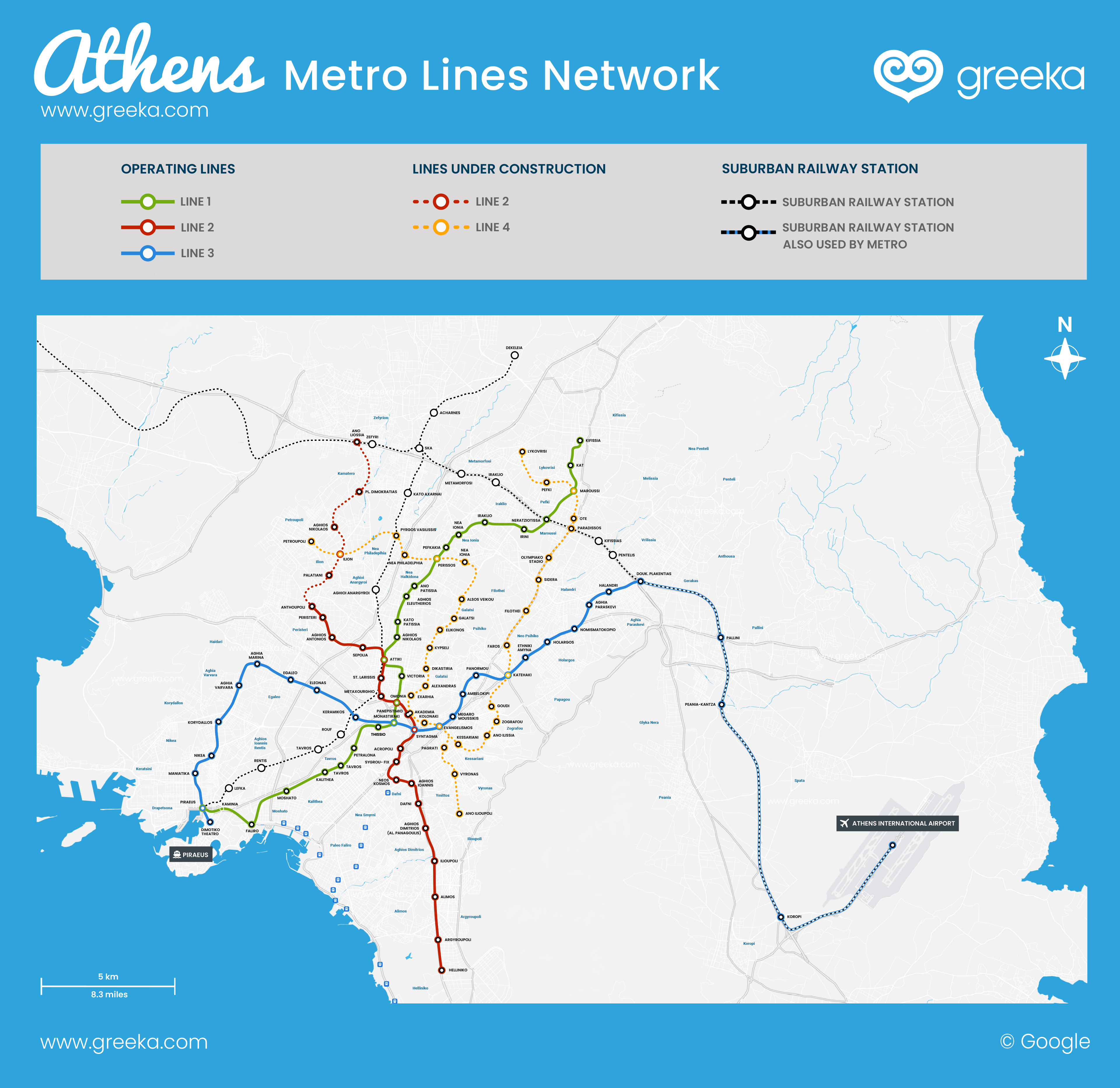
Monastiraki is the best stop for those seeking the famous flea market and views of the ancient Agora. Both Line 1 and Line 3 meet here, making it a highly accessible spot for evening dining. The square stays lively until late at night with street performers and local vendors. Check the View the full Athens metro map (image) to see how Monastiraki links to the coast.
- Acropolis Station (Line 2)
- Access: Direct museum entry
- Best for: Ancient history
- Tip: Use south slope entrance
- Crowds: High after 10 AM
- Monastiraki Station (Lines 1 & 3)
- Access: Flea market hub
- Best for: Shopping and food
- Tip: Rooftop bars nearby
- Vibe: Energetic and touristy
Metro lines in Athens
Line 1, often called the 'Electric' or Green Line, is the oldest part of the network. It connects the port of Piraeus to the northern suburb of Kifissia via the city center. While parts of this line run above ground, it remains a reliable way to reach the ferry terminals. Expect a slightly slower pace on this line compared to the newer underground routes.

Line 2, the Red Line, runs from Anthoupoli to Elliniko and services the major tourist core. Key stops include Omonia, Panepistimio, and Syngrou-Fix for various cultural landmarks. Trains usually run every 5 to 10 minutes depending on the time of day. This line is essential for reaching the National Library and the University of Athens.
Line 3, the Blue Line, is perhaps the most vital for international travelers arriving in Greece. It stretches from the airport all the way to the bustling port of Piraeus. The modern stations on this route feature impressive glass architecture and high-speed escalators. Always verify the train's final destination, as not all Blue Line trains go to the airport.
Athens Public Transport Ticket Prices (2026)
All metro, bus, tram and trolleybus fares are set by OASA and use the same ticket pool — buy once and transfer freely within the validity window. The single ticket gives 90 minutes of unlimited travel across every mode, so most short city hops on the same fare. The airport is the only zone with a separate, higher price. These are the current 2026 fares:
| Ticket | Price (2026) | Covers |
|---|---|---|
| 90-minute single | €1.20 | Unlimited transfers (metro, bus, tram, trolleybus) for 90 min; no airport |
| 24-hour pass | €4.10 | Unlimited city travel for 24 h; no airport |
| 5-day pass | €8.20 | Unlimited city travel for 5 days; no airport |
| Airport metro single (one-way) | €9.00 | One trip to/from Athens Airport on M3 |
| Airport metro return | €16.00 | Round trip to/from the airport (valid ~30 days) |
| 3-day tourist ticket | €20.00 | Unlimited city travel for 72 h + one round-trip airport transfer |
| Airport express bus (X95/X96) | €5.50 | One airport trip by bus (cheaper than the metro) |
| Reduced fare (6–18, 65+, students) | €0.50 | 90-min single at half price; ID required |
Tap2Ride (the easy 2026 option): Across the whole OASA network you can now skip tickets entirely and tap a contactless bank card, Apple Pay or Google Pay directly on the yellow reader at the gate or bus door. Daily spend is auto-capped at the 24-hour price (€4.10), so extra rides after that are free. Airport trips still charge the airport fare (€9.00 metro, €5.50 bus). The one catch: contactless does not apply reduced (€0.50) fares — children, seniors and students must use a paper ticket or ATH.ENA card to get the discount. Always tap the same card both entering and exiting the metro so the system reads your trip correctly.
ATH.ENA Card, the OV chip card of Athens
The ATH.ENA Card has replaced traditional paper tickets with a more sustainable electronic system. You can choose between the ATH.ENA Ticket for short stays or the reloadable ATH.ENA Card. The plastic card is ideal if you plan to stay in Athens for more than a week. Personalized cards require a passport but offer protection if the card is lost or stolen.
Validation is mandatory every time you enter a station or board a bus or tram. Simply tap your card or ticket on the yellow electronic readers at the gates. Failure to validate can result in heavy fines, even if you have a valid balance. The gates will only open once the reader confirms your active fare or pass.
Reloading your card is simple at any automated machine or staffed ticket office. Machines offer instructions in multiple languages, including English, French, and German. An anonymous ATH.ENA Card can hold stored value up to €50 (or a season pass up to 365 days), and you can load products like the €1.20 90-minute single, the €4.10 daily pass, or the 5-day pass. Similar systems are used in other cities like the Bari public transport network.
Athens Train Station 🚆 – Larissa Central Station
Larissa Station serves as the primary gateway for those traveling beyond the city limits. It is conveniently located on Metro Line 2, making it easy to reach from Syntagma. The station connects Athens to Thessaloniki and other major Greek cities via the national rail. Travelers should arrive at least 20 minutes before their train departure to navigate the platforms.
The surrounding area has undergone recent renovations to improve accessibility and safety. Inside, you will find basic amenities like cafes, kiosks, and baggage storage lockers. Staff at the ticket counters generally speak English and can assist with regional bookings. Keep your metro ticket handy as you may need it to exit the station complex.
Proastiakos suburban rail also operates from this hub, connecting to the airport and Corinth. This service is distinct from the metro, though some ticket types may overlap. Always double-check your platform number on the electronic boards located in the main hall. If you are heading to Italy next, you might find the Catania public transport guide useful.
Athens Trams 🚋 – The Scenic Route to the Sea
The Athens tram network offers a slower but highly scenic alternative to the underground metro. Lines T6 and T7 connect the city center to the beautiful Athenian Riviera. Starting from Syntagma, the tram glides through Nea Smyrni before reaching the coast. It is the perfect choice for a relaxed afternoon trip to the beaches of Glyfada.
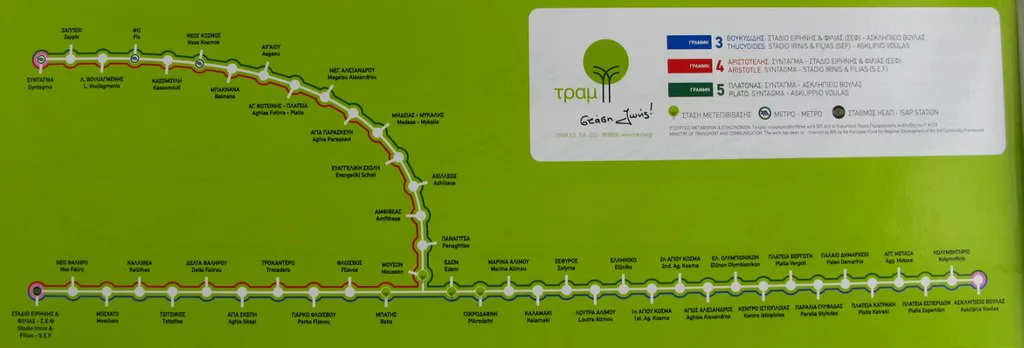
Travel times are longer than the metro, often taking 60 minutes to reach the seaside. However, the large windows provide excellent views of the Saronic Gulf during the journey. Trams run frequently, but traffic in the city center can occasionally cause minor delays. Standard 90-minute tickets are valid here, making it a very budget-friendly excursion.
During the summer of 2026, expect increased frequency to accommodate beach-goers. Night trams often run on weekends, providing a safe way back from coastal bars. Look for the modern silver trams that feature air conditioning and digital stop announcements. This coastal route is much more scenic than the Reims public transport streetcar lines.
Getting To and From Athens International Airport (ATH) ✈️
Reaching the city center from the airport is most efficient via Metro Line 3 (Blue). A special airport ticket is required: €9.00 one-way or €16.00 return, well above the €1.20 city fare. Trains depart roughly every 30–36 minutes, so checking the schedule before you land is wise. The journey to Syntagma Square takes approximately 40 minutes in normal conditions.
Express buses like the X95 offer a 24-hour alternative to the metro system. These buses are cheaper than the train but are subject to unpredictable city traffic. The X96 bus is specifically designed for travelers heading directly to the Piraeus port. Tickets for the express bus can be purchased from the kiosk outside the arrivals hall.
Ensure you validate your airport ticket immediately upon entering the station platform. The airport station is shared with the suburban railway, so follow the 'Metro' signs carefully. If you miss the last train at 11:30 PM, the express bus becomes your only public option. For more travel inspiration, visit the hopwander blog for expert tips.
Frequently Asked Questions
Which metro tickets can I buy best for a 3-day trip?
The 3-day tourist ticket is the best value for short visits. It includes a round-trip airport transfer and unlimited travel on all Athens public transport for 72 hours. You can purchase this at the airport or major central stations. Check our public transport guides for more details.
At which metro stop should I get off for sights like the Parthenon?
You should get off at the Acropolis station on Line 2 for the Parthenon. This exit places you directly at the base of the hill near the pedestrian walkway. Monastiraki and Syntagma are also within easy walking distance of major historic landmarks.
What should travelers avoid when using the Athens metro?
Avoid forgetting to validate your ticket before boarding, as inspectors frequently check for stamped fares. Also, be wary of pickpockets in crowded stations like Omonia or Monastiraki. Never board an airport-bound train without the specific, higher-priced airport ticket to avoid heavy fines.
Mastering the Athens metro map and tickets system is the key to a stress-free Greek holiday. With a little preparation, you can navigate from the airport to the Acropolis like a local. The combination of modern efficiency and ancient history makes this transit network truly unique. Enjoy your journey through one of the world's most historic cities with confidence.
Free: The European City Transport Cheat Sheet
Airport-to-centre, the best ticket to buy, and the one local gotcha — for 5 European cities, plus the universal rules for trams, ferries, and parking.
You might also like



Continue reading
More guides you'll find useful