Reims Public Transport Guide: 9 Things to Know
Master Reims public transport with our guide to CITURA trams, buses, and the CityBus shuttle. Includes ticket prices, app tips, and TGV transfer advice.
 By Marco Bellini
On this page
Reims Public Transport Guide: 9 Things to Know
Quick answer: Reims public transport (operated under the Grand Reims Mobilités brand, still widely called CITURA) runs 2 tram lines + 20-plus bus lines daily from about 5:15 AM to 00:25 AM. A 1-hour ticket is about €1.50 (transfers included); a 24-hour day pass is about €3.70. Just tap a contactless card or phone on the on-board validator — no kiosk needed. Arriving by high-speed train? Take Tram B from Gare Champagne-Ardenne TGV (at Bezannes) into the centre — roughly 20 minutes. The historic core itself is compact and flat enough to walk.
Navigating Reims is surprisingly simple thanks to its modern and efficient transit infrastructure. The city center remains compact and walkable, but the robust Reims public transport network connects the historic heart to suburban treasures. Whether you arrive for a day trip or a long weekend, understanding the tram and bus systems is essential.
The network is operated by Grand Reims Mobilités, commonly known as CITURA, and provides seamless coverage across the metropolitan area. Visitors often rely on these services to reach famous Champagne houses located just outside the immediate center. This guide will walk you through every detail, from ticket costs to late-night travel options.
If you are planning to visit other French cities, you might also find our Colmar public transport guide helpful for your journey. Much like other regional hubs, Reims has integrated digital payments to make boarding easier for international tourists. Let's explore how to master the local lines for a stress-free visit.
Free: The European City Transport Cheat Sheet
Airport-to-centre, the best ticket to buy, and the one local gotcha — for 5 European cities, plus the universal rules for trams, ferries, and parking.
The CITURA Network Overview
Reims public transport is managed under the Grand Reims Mobilités brand, which oversees all trams, buses, and on-demand services. The system is operated by Transdev Grand Est, ensuring high standards of frequency and cleanliness. Most routes converge at Gare Centre, the city's primary railway station located near the pedestrian zone.
The network is designed to cater to both daily commuters and the thousands of tourists who visit the Cathedral annually. You will find that the signage is clear, often featuring English translations at major hubs. Navigating between historical sites and modern shopping districts takes only a few minutes by tram.
Travelers often compare this system to other regional networks like the one found in our Dijon public transport guide. Both cities prioritize a pedestrian-friendly core supported by high-capacity transit lines. In Reims, the transit authority has worked hard to ensure that even the furthest Champagne cellars remain accessible to the public.
The fleet consists of modern, low-floor vehicles that make boarding easy for everyone. Whether you are carrying luggage from the train or pushing a stroller, the level access is a significant benefit. Most major stops also feature electronic displays showing the wait time for the next arriving vehicle.
Tram Lines A and B
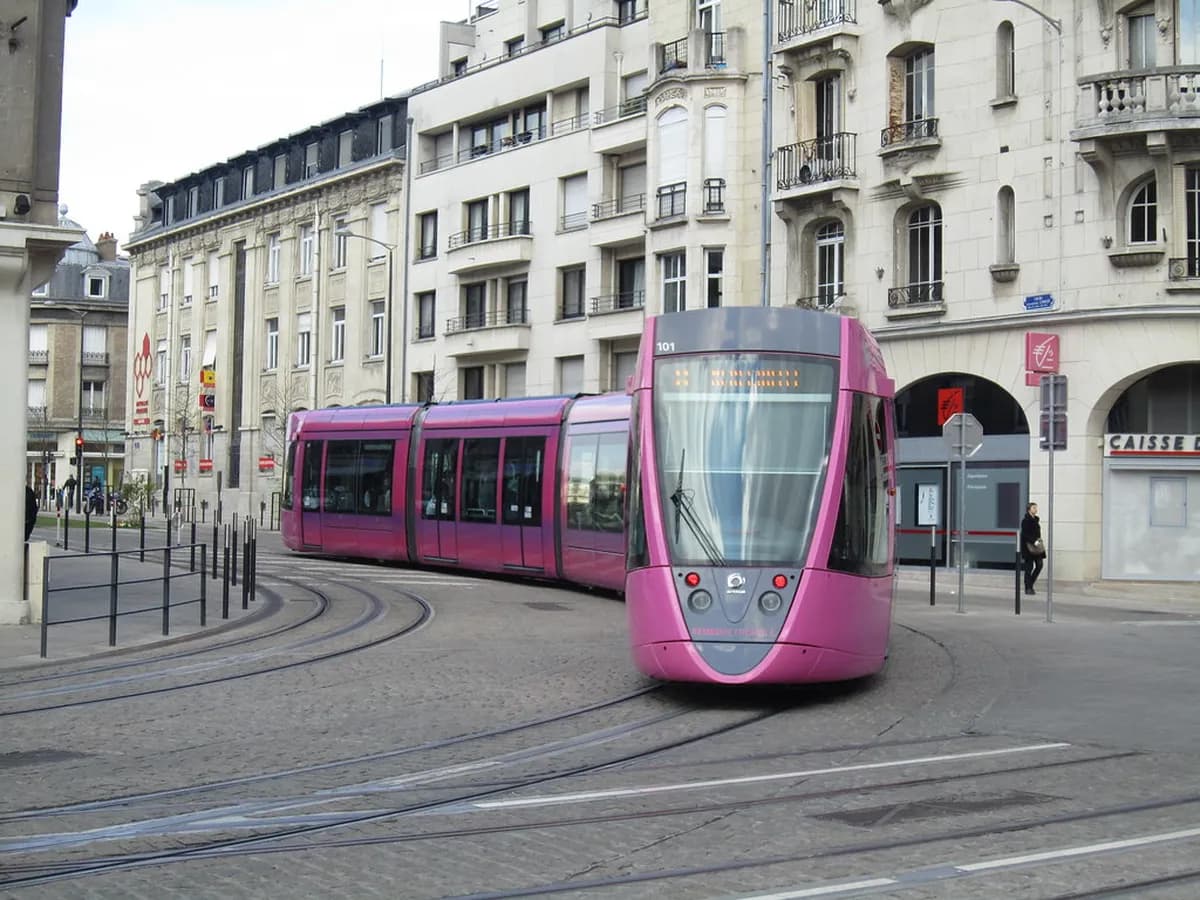
The tramway is the backbone of the city, consisting of two main lines that share a central trunk. Line A and Line B run together through the heart of Reims, serving the Opera and Cathedral areas. They diverge at the southern end of the city, so checking the destination on the front of the tram is vital.
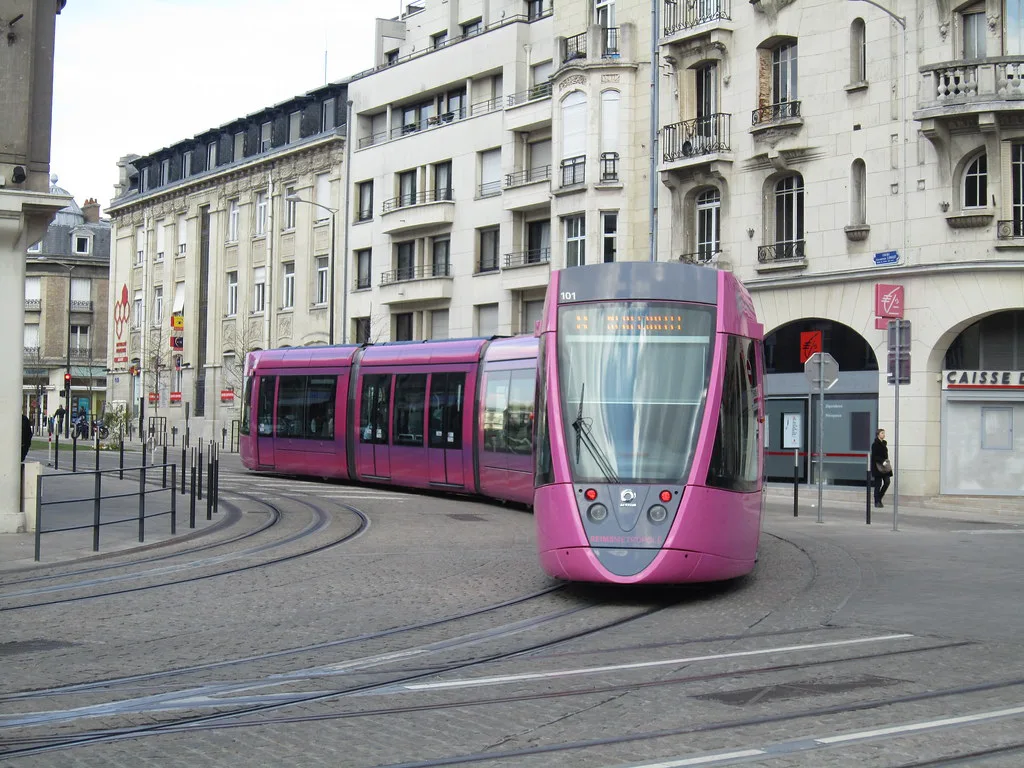
Line B is particularly important for those arriving from Paris via the high-speed rail link. It provides a direct connection between Gare Champagne-Ardenne TGV (located out at Bezannes, the southern terminus of Line B) and the city center, taking roughly 20 minutes end to end. This saves travelers from having to book secondary regional trains to reach the historic district. Note that this is the out-of-town TGV station — the in-town Gare Centre handles regional TER and direct Paris-Est trains.
Trams typically run every 6 to 10 minutes during peak daylight hours, offering a very reliable service. During the evenings, the frequency drops to approximately every 20 minutes until service ends around midnight. The sleek, colorful tram cars are hard to miss as they glide through the city's wide boulevards.
Accessibility is a standout feature of the tram system, with every station offering ramped access to the platforms. Inside the cars, there are dedicated spaces for wheelchairs and large bags. This makes the tram the preferred choice for those transferring from long-distance rail services with heavy suitcases.
The Regular Bus Network
While the trams handle the heavy lifting, the bus network reaches the corners of the city where tracks don't go. Over 20 regular bus lines crisscross the region, connecting residential neighborhoods with commercial centers. Buses are categorized by frequency, with 'Lignes Fortes' (Strong Lines) offering the most consistent service.
Most bus routes operate from early morning until roughly 9:00 PM, after which the evening network takes over. If you are staying in a hotel outside the city center, the bus is often your most direct link to dinner spots. Many lines stop directly in front of Gare Centre for easy transfers to the tram.
Drivers generally do not sell tickets on board, so you must have a valid pass before entering. You can find ticket machines at almost every tram stop, which also serve bus passengers. The buses are clean and climate-controlled, providing a comfortable ride even during the warm summer months.
For those exploring more of the Grand Est region, understanding these local connections is as important as knowing the Colmar public transport options. Each city has its own nuances, but the CITURA buses are known for their punctuality. Always remember to check the line number and direction at the stop's electronic pole.
The CityBus Tourist Shuttle
The CityBus is a specialized shuttle designed specifically for visitors who want to see the major sights without long walks. This small, electric bus loops through the city center every 10 to 15 minutes. It is an excellent way to bridge the gap between the Cathedral and the distant Champagne houses.

You can catch the CityBus at Gare Centre and ride it toward the Saint-Remi Basilica or the Pommery cellars. The compact size of the vehicle allows it to navigate narrow streets that larger buses cannot enter. It offers a scenic view of the city's diverse architecture as you move between stops.
Standard CITURA tickets and passes are fully valid on the CityBus, making it a cost-effective alternative to taxis. Many tourists use it to reach Taittinger or Veuve Clicquot after spending the morning at the Museum of the Surrender. It runs daily, though schedules may be slightly reduced on Sundays and public holidays.
Pro Tip: Keep your ticket handy, as you must validate it every time you board the shuttle. Even if you just transferred from a tram, a fresh tap on the reader is required. This ensures your trip is correctly logged in the system and avoids potential fines during inspections.
Ticket Prices and Payment Methods
Reims has modernized its payment system by introducing 'Open Payment' across all vehicles. You can now simply tap your contactless credit card or smartphone on the validator when boarding. This automatically charges the price of a single ticket without the need to visit a kiosk.
If you prefer physical tickets, vending machines are located at all tram stations and accept both cash and cards. For sightseeing, the 24-hour day pass (about €3.70) pays for itself after roughly three rides, and multi-day passes cover 48 and 72 hours for visitors staying longer. A 10x1H carnet (10 single trips on one card) is the cheapest option for couples or small groups who only hop on a few times a day. Children under the age of four travel for free on all services.
Consult the Grand Reims Mobilités / CITURA Official Site for the most current price updates before your trip. Fares are subject to small annual adjustments, so checking official sources is always recommended. Always validate your ticket immediately upon entering the bus or tram to avoid a fine of around €60.
| Ticket | Price (2026, approx.) | Best for | Where to buy |
|---|---|---|---|
| Single 1-hour ticket | €1.50 (unlimited transfers within 60 min) | Quick one-way journeys | Contactless tap or machine |
| 10x1H carnet (10 trips) | Discounted per ride vs. singles | Couples or small groups | Vending machines, Boutique CITURA, app |
| 24-hour day pass | €3.70 | One full sightseeing day | Vending machines, app |
| 48-hour pass | €6.50 | A long weekend | Vending machines, app |
| 72-hour pass | €7.50 | Three-day visits | Vending machines, app |
Prices are 2026 indications; confirm the exact figure on the official site, as tariffs are adjusted annually. The day and multi-day passes are activated from first validation, not from purchase.
Reaching Top Attractions via Public Transport
The Cathédrale Notre-Dame de Reims is the city's crown jewel and is easily reached via Tram A or B. Simply exit at the 'Opera' stop and walk two minutes toward the towering spires. Most of the city's central museums are also within a five-minute walk from this transit hub.

To visit the famous Champagne houses like Pommery or Vranken, take the CityBus or Bus Line 4 toward the south. These cellars are a bit too far to walk comfortably from the center, especially in inclement weather. Using the bus allows you to save your energy for the extensive underground cellar tours.
The Museum of the Surrender, where WWII ended, is located right next to Gare Centre. If you are staying near the Cathedral, any northbound tram will take you there in under five minutes. This site is a must-see for history buffs and is perfectly integrated into the transit loop.
Planning your route is similar to navigating other historic European centers, such as the tips found in our Assisi public transport guide. While the modes of transport differ, the strategy of using a central hub remains the most efficient way to see everything. Always check for seasonal closures of specific lines during local festivals.
On-Demand and Evening Services
When the sun goes down, the transit network shifts to accommodate the nightlife and late-shift workers. The Noctambus is a dedicated night service that runs from 9:00 PM until 6:00 AM on specific routes. This ensures that students and tourists can return to their accommodation safely after the regular lines stop.
For the wider Grand Reims area, the 'Transport à la Demande' (TAD) system provides a flexible solution. This on-demand service must be booked in advance via the app or by phone. It functions like a shared shuttle that picks you up at a designated stop and brings you to a major transit hub.
Booking a TAD trip is simple if you plan at least an hour in advance. It is an essential service for reaching smaller villages or specific industrial zones not covered by the tram. This level of service is a great example of how the city supports its rural outskirts.
The evening network is generally safe and well-lit, with security personnel often present at Gare Centre. If you are traveling alone late at night, the Noctambus stops are clearly marked with a moon icon. This service is a lifesaver during the busy Christmas market season when the city stays active late into the night.
Real-Time Navigation Apps
The official CITURA mobile app is the best tool for checking live arrival times and service alerts. It allows you to buy digital tickets directly on your phone, which you then scan upon boarding. The app also features an interactive map that shows your exact location relative to the nearest stop.
For those who prefer a more universal tool, the Transit App (iOS) is fully integrated with Reims' data. It provides excellent step-by-step navigation and even alerts you when your stop is approaching. Many international travelers find this interface more familiar and easier to use.
Google Maps also provides reliable routing for Reims public transport, including the tram and bus schedules. However, for the most accurate real-time updates regarding delays or detours, the local app is superior. Having one of these tools downloaded before you arrive will make your first transfer from the station much smoother.
Digital tools are becoming the standard across France, as seen in our Bari public transport guide for those heading further south into Europe. In Reims, the combination of free station Wi-Fi and these apps ensures you are never lost. Technology has truly removed the guesswork from navigating this historic city.
Walking and Cycling in Reims
For most visitors, the single best way to see central Reims is on foot. The historic core is compact and almost entirely flat, so the Cathédrale Notre-Dame, Place Drouet d'Erlon, the Palais du Tau, and the main shopping streets all sit within a 10-to-15-minute walk of one another. You only really need the tram or bus to reach the outlying Champagne houses, the TGV station, or your hotel at the end of a long day.
Cycling is the other strong option, and Reims is well set up for it. The city runs Zébullo, a self-service, fully electric bike-share scheme — roughly 120 e-bikes spread across about 17 docking stations — that you unlock from an app, which is ideal for the gentle ride out to the southern cellars. Reims also has more than 50 km of marked cycle routes, and the standout is the Coulée Verte, a car-free greenway laid along a former railway line that cuts across the city and links several districts and green spaces.
A practical note: the trams and buses do not officially carry bicycles during peak hours, so plan a cycling day as a self-contained loop rather than mixing it with transit. If you would rather not pedal up the slight rise back from the Saint-Remi and Champagne-house district, a Zébullo e-bike takes the effort out of the return, and you can drop it at the nearest station near the centre.
Frequently Asked Questions
How do I pay for the bus or tram in Reims?
You can pay using the 'Tap to Pay' system with a contactless credit card or smartphone directly on the validators. Alternatively, purchase physical tickets or passes at vending machines located at all tram stops. For more details on regional travel, check our public transport guides.
Is there a tram from Reims TGV station to the city center?
Yes, Tram Line B connects Gare Champagne-Ardenne TGV (at Bezannes) directly to the Reims city center in roughly 20 minutes. This is the most convenient way to reach the historic district from the high-speed rail station without booking a secondary regional train. Trams run frequently throughout the day to match TGV arrivals.
What is the best way to get to the Champagne houses in Reims?
The CityBus tourist shuttle or Bus Line 4 are the best options for reaching major Champagne houses like Pommery and Taittinger. These services depart from the city center and stop within a short walk of the cellar entrances. Walking is possible but takes significantly longer.
Does Reims have a 24-hour public transport system?
Reims does not have a full 24-hour system, but the Noctambus provides service from 9:00 PM to 6:00 AM on select routes. Regular bus and tram services typically end around midnight. The Noctambus is specifically designed to help late-night travelers reach key residential and student areas.
Can I use contactless credit cards on Reims public transport?
Yes, all CITURA buses and trams are equipped with contactless readers for 'Open Payment.' Simply tap your card or mobile wallet when you board to pay for a single fare. This is the most convenient method for tourists who do not want to navigate vending machines.
Mastering Reims public transport is the key to a successful visit to this historic Champagne capital. From the efficient TGV tram link to the convenient CityBus shuttle, the network is designed with the traveler in mind. By utilizing the modern 'Tap to Pay' system, you can focus more on the sights and less on the logistics.
Whether you are heading to the Cathedral or exploring the deep chalk cellars of a world-famous winery, CITURA has you covered. Remember to download a navigation app and always validate your ticket to ensure a smooth journey. For more travel inspiration and guides, visit the Hopwander blog.
Reims continues to invest in its infrastructure, making it one of the most accessible cities in northern France. As you plan your 2026 travels, keep these tips in mind for a stress-free experience. Enjoy the rich history and sparkling culture that this remarkable city has to offer.
Free: The European City Transport Cheat Sheet
Airport-to-centre, the best ticket to buy, and the one local gotcha — for 5 European cities, plus the universal rules for trams, ferries, and parking.
You might also like



Continue reading
More guides you'll find useful