Jerez Public Transport Guide: Getting Around & Arrival Tips
Master Jerez public transport with our guide to local buses, train schedules, airport transfers, and walking routes in the historic center.
 By Marco Bellini
On this page
Jerez Public Transport Guide
Short answer: Jerez de la Frontera is small and mostly flat, so you will walk almost everywhere in the old town. From Jerez Airport (XRY), take the C-1 Cercanías train (about 7-10 minutes, €2.55) into the centre — far better than the airport bus, which runs only a few times a day. For everything else, the red Comujesa city buses cost €1.10 a ride (cheaper with a Bonobús card), and a taxi from the airport is a fixed €15-19.
The narrow historic core is a Low Emission Zone (ZBE), so most visitors should leave the car in an underground car park (Plaza del Arenal or El Mamelón) rather than drive in. The sections below break down arrival, city buses, taxis, walking, regional connections, parking and fares in detail.
Free: The European City Transport Cheat Sheet
Airport-to-centre, the best ticket to buy, and the one local gotcha — for 5 European cities, plus the universal rules for trams, ferries, and parking.
Arriving in Jerez: Air, Rail, and Road Options
Jerez Airport (XRY) is located just 8 kilometers northeast of the city center, making arrivals quite convenient. The airport has its own Cercanías station, so the fastest option is the C-1 train, which reaches Jerez de la Frontera station in only 7 to 10 minutes for €2.55. The M-050 (and M-052) airport bus is cheaper at around €1.50, but it only runs a few times a day, so check the timetable before relying on it. A taxi to the centre is a fixed €15 on weekdays and €19 at night, on weekends and holidays, plus roughly €0.60 per suitcase. Check the Turismo Jerez Official Site for seasonal schedule changes.
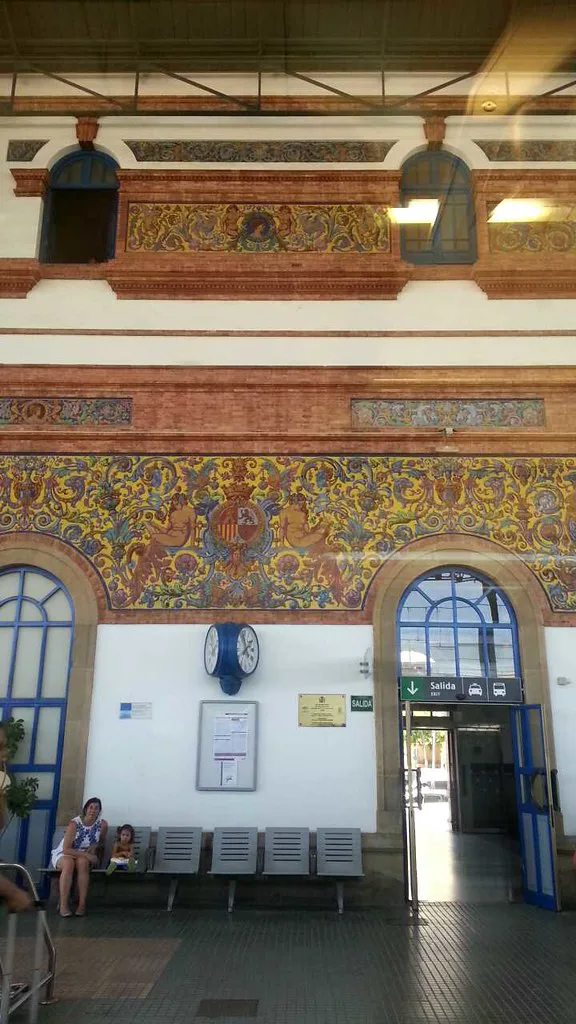
The main train station, Estación de Jerez de la Frontera, sits on the eastern edge of the historic core. It serves as a major stop for Alvia high-speed trains coming from Madrid and regional Media Distancia services. Walking from the station to the Plaza del Arenal takes roughly 15 minutes through flat streets.
If you are arriving by car, be aware that the historic center features many restricted ZBE (Low Emission Zone) areas. Large underground parking lots like Plaza del Arenal or Mamelón offer the best chance for secure vehicle storage. Driving within the narrowest alleys often leads to dead ends or difficult maneuvers.
Intercity buses arrive at the central bus station located right next to the railway tracks. This facility connects Jerez with major Andalusian hubs like Seville, Málaga, and Algeciras. Most long-distance coaches offer modern amenities and luggage storage for a comfortable ride.
Navigating the City via Local Bus (Comujesa)
The urban bus network in Jerez is managed by Comujesa and consists of 18 different lines. These red buses are the primary way to reach areas outside the immediate pedestrian center. Most lines operate from early morning until approximately 11:00 PM on weekdays.

Visitors frequently use Line 1 and Line 10 to reach popular destinations like the Royal School of Equestrian Art. You can find detailed route maps and live updates on the Comujesa (Local Bus Operator) website. Many stops now feature digital displays showing the estimated arrival time for the next vehicle.
Buying a single ticket on board costs roughly €1.10, but frequent riders should consider a multi-trip card. These rechargeable cards significantly reduce the per-journey cost and can be shared among groups, just as the bono-style passes do in other Spanish cities covered in our Murcia public transport guide. You can purchase these at local tobacco shops (estancos) or designated kiosks across the city.
Boarding usually happens through the front door, where you must validate your card or pay the driver. The buses are generally air-conditioned, which is a vital feature during the intense heat of the Andalusian summer. Keep an eye on the interior screens for upcoming stop names to avoid missing your destination.
- Line 1: Esteve to San Telmo
- Type: Urban Bus
- Best for: Central Access
- Where: Plaza Esteve
- Cost: €1.10 Single
- Line 10: Canaleja to Hospital
- Type: Urban Bus
- Best for: Equestrian School
- Where: Avenida Álvaro Domecq
- Cost: €1.10 Single
Taxis and Private Transport Services
Taxis in Jerez are white with a blue stripe and are a reliable way to get around quickly. You will find major taxi ranks at the airport, the train station, and central spots like Plaza del Arenal. They operate on a metered system with different rates for day, night, and holidays.
A typical trip within the city limits usually ranges between €5 and €10 depending on traffic. Airport transfers have a fixed minimum rate that often includes a small luggage supplement. It is common to tip a small amount by rounding up the fare for good service.
Private hire services like Uber or Cabify have a limited presence compared to larger Spanish cities. Traditional radio-taxi services remain the most dependable way to book a ride in advance for early morning departures. Most drivers accept credit cards, but carrying some cash is still recommended for shorter trips.
If you are traveling with a large group, you can request a minivan taxi at the main ranks. These larger vehicles are perfect for families with multiple suitcases or strollers. Always ensure the meter is started at the beginning of your journey to avoid any price disputes.
Exploring the Historic Center on Foot
Walking is arguably the best way to experience the soul of Jerez de la Frontera. The historic center is mostly flat and features many pedestrian-only streets that lead to hidden plazas. Most major monuments, including the Cathedral and the Alcázar, are within a 10-minute walk of each other.
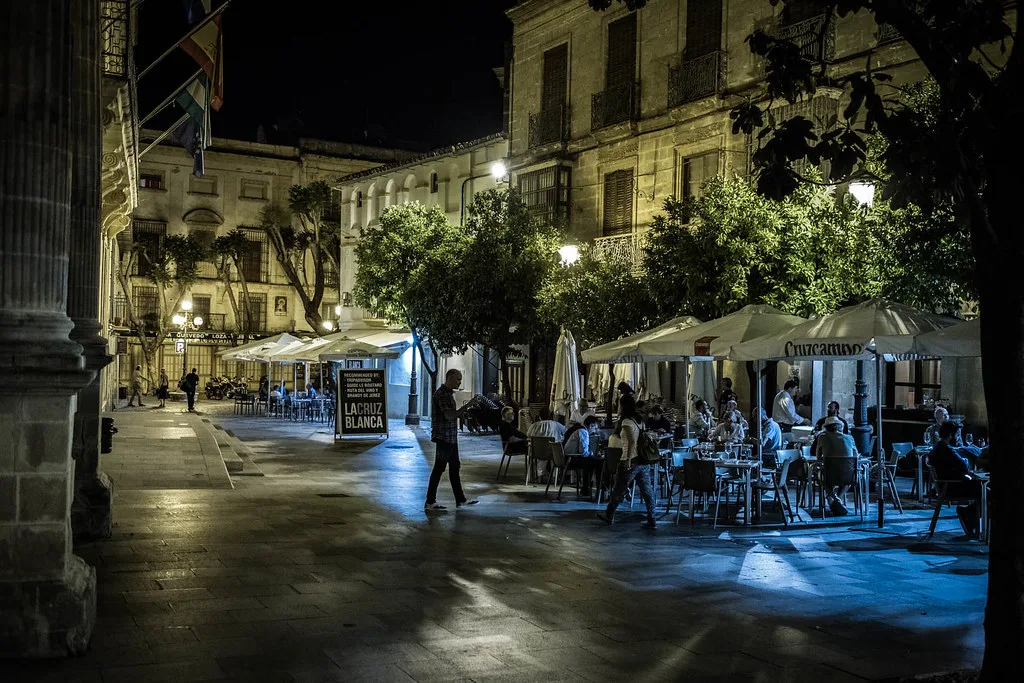
Navigating the labyrinthine streets of the old sherry quarters requires a good map or a reliable GPS app. While the main thoroughfares are well-marked, the smaller side streets can be confusing for first-time visitors. Comfortable footwear is essential as many paths still feature traditional cobblestone surfaces.
Pedestrian zones like Calle Larga offer a safe environment away from heavy traffic and exhaust fumes. These areas are lined with shops, cafes, and orange trees, making for a pleasant stroll. During the midday siesta, these streets become quiet, offering a peaceful atmosphere for photography.
Safety is generally high in the tourist areas, but always stay aware of your surroundings in crowded spots. Similar to the layout in Assisi public transport guides, walking allows you to discover local details missed by bus. Take frequent breaks at local tabancos to sample the famous regional wines.
Parking for Visitors Arriving by Car
If you arrive by car, do not try to park inside the old town. The historic core within the walls (the intramuros area covering Calle Larga, Porvera, Lancería and Plaza del Arenal) is a Low Emission Zone (Zona de Bajas Emisiones, ZBE). Cameras read your number plate at the access points, so the safest move is to leave the car on the edge of the centre and walk in.
The two most useful underground car parks are Parking Plaza del Arenal, right in the central square, and Parking El Mamelón, a short walk from Calle Larga. Both are well signposted, secure, and put you within a 5-minute stroll of the main monuments. Expect roughly €1.50-2.00 per hour, with cheaper daily maximum rates if you stay overnight — a leave-the-car-on-the-edge approach that mirrors the advice in our Arrecife parking guide for compact Spanish town centres.
Good news for 2026: Jerez is running its ZBE with a long grace period. During the first months of the year the cameras only detect plates and send an informational notice instead of the €200 fine, and the council has stated the zone adds no new traffic restrictions beyond areas that were already pedestrianised. Public car parks are whitelisted automatically when you enter; if you use a private garage or a hotel with its own parking, register your plate through the Town Hall website (zbe.jerez.es) so your access is authorised.
- Parking Plaza del Arenal
- Type: Underground car park
- Best for: Central monuments
- Where: Plaza del Arenal
- Cost: ~€1.50-2.00/hour
- Parking El Mamelón
- Type: Underground car park
- Best for: Calle Larga shopping
- Where: Plaza del Mamelón
- Cost: ~€1.50-2.00/hour
Regional Connections: Trains and Intercity Buses
Jerez is perfectly positioned for exploring the wider Bay of Cádiz region. The C-1 Cercanías train line is the most efficient way to visit the coastal city of Cádiz. Trains run frequently throughout the day, with the journey taking approximately 45 minutes. Find the latest rail prices on the Renfe (Spanish Rail) portal.
Using the "Consorcio de Transportes" card is a smart move for regional travelers. This green card works on local buses, intercity coaches, and even the ferry between El Puerto de Santa María and Cádiz. It provides significant discounts compared to buying individual paper tickets for every leg.
Intercity buses from the main station connect you to the famous "White Villages" of Andalusia. Routes to Arcos de la Frontera or Grazalema allow for scenic day trips into the mountains. These buses are often less frequent than trains, so checking the departure board a day in advance is wise.
For those heading further afield, Media Distancia trains provide direct links to Seville in just over an hour. This makes Jerez an excellent base for travelers who want to see the regional capital without staying there, much as cities elsewhere in Spain lean on rail and metro to stitch their suburbs together — see our Bilbao metro guide for a northern contrast. Much like the connections seen in Bari public transport networks, the rail system here is the backbone of regional mobility.
Practical Information: Fares, Apps, and Accessibility
Understanding the fare structure helps you choose the most cost-effective way to travel. While single tickets are easy, the rechargeable Bonobús card is better for stays longer than two days, and the same fare-stacking logic applies almost everywhere — our getting around Europe overview explains how to pick the right pass before you arrive. You can check your remaining balance at the same kiosks where you top up the card.
| Ticket / Card | Price | Where to buy | Best for |
|---|---|---|---|
| Single urban bus ticket | €1.10 | On the bus (cash) | One-off trips |
| Bonobús (10 trips) | ~€0.80 per trip | Tobacco shops (estancos), kiosks | Stays of 2+ days |
| Consorcio regional card | Variable discount | Main stations | Day trips to Cádiz / White Villages |
| C-1 Cercanías (airport → centre) | €2.55 | Station machine / app | Fast airport arrival |
| Airport taxi (fixed) | €15 day / €19 night | Airport rank | Luggage / groups |
Accessibility has improved significantly across the Jerez public transport network in recent years. Most modern Comujesa buses feature low floors and ramps for wheelchair users and parents with strollers. The main train station also provides specialized assistance services for passengers with reduced mobility.
Mobile apps like "Jerez Bus" or Google Maps provide reliable route planning and stop locations. These tools are invaluable for navigating the 18 different lines without carrying a paper map. Real-time data helps you decide whether to wait for the next bus or simply walk to your destination.
Travelers should note that transport frequency often decreases during local festivals like the Feria del Caballo. During these times, special shuttle services might run to the fairgrounds from various neighborhoods. Always look for temporary signage at major stops during the month of May.
- Single Urban Bus Ticket
- Type: Cash Payment
- Best for: One-off trips
- Where: On the bus
- Cost: €1.10
- Bonobús (10 Trips) Card
- Type: Rechargeable
- Best for: Frequent use
- Where: Tobacco shops
- Cost: ~€0.80 per trip
- Consorcio Regional Card
- Type: Multi-modal
- Best for: Regional trips
- Where: Main stations
- Cost: Variable discount
Frequently Asked Questions
How do I get from Jerez airport to the city center?
You can take the C-1 Cercanías train or the M-050 bus directly from the airport terminal. Both options take about 15-20 minutes to reach the central station. Taxis are also available at the arrivals gate for a fixed minimum fare. For more regional tips, see our public transport guides.
Is there a bus from Jerez to Cádiz?
Yes, several intercity buses run between Jerez and Cádiz daily from the main bus station. However, the C-1 Cercanías train is usually faster and more frequent for this specific route. The journey by rail offers beautiful views of the salt marshes along the bay.
How much is a bus fare in Jerez?
A single urban bus ticket in Jerez currently costs €1.10 when purchased from the driver. Using a rechargeable Bonobús card reduces the price to approximately €0.80 per journey. These cards are available at many local kiosks and tobacco shops throughout the city.
Is Jerez de la Frontera walkable for tourists?
Jerez is highly walkable, especially within the historic center where most major attractions are located. The terrain is largely flat, making it easy to navigate on foot for most visitors. Walking allows you to explore the narrow streets that buses cannot enter.
Mastering the Jerez public transport system allows you to explore this Andalusian gem with confidence and ease. From the reliable urban buses to the efficient regional trains, every corner of the city is within reach.
Whether you are visiting for the world-class sherry or the stunning architecture, knowing your travel options saves both time and money. Use the local transport cards to enjoy the best value during your stay.
Embrace the slow pace of the historic center on foot, but don't hesitate to use the bus for longer journeys. Jerez de la Frontera is a city that rewards those who take the time to navigate it well.
Free: The European City Transport Cheat Sheet
Airport-to-centre, the best ticket to buy, and the one local gotcha — for 5 European cities, plus the universal rules for trams, ferries, and parking.
You might also like


Continue reading
More guides you'll find useful