Bilbao Metro Routes and Tickets: 7 Essential Things to Know
Master the Bilbao metro with our guide to routes, zones, and tickets. Learn how to save with the Barik card, understand fare zones, and navigate Lines 1, 2, and 3.
 By Marco Bellini
On this page
Bilbao Metro Routes and Tickets: 7 Essential Things to Know
TL;DR for most visitors (2026): Buy a rechargeable Barik card (€3) at any station machine, load it with Creditrans credit, and tap in and out at the barriers. A Zone 1 ride drops from the €1.80 paper single to roughly €1.00 on Creditrans, and one anonymous Barik card can be tapped for a whole group. Stick to Zone 1 for the Guggenheim, Casco Viejo and San Mamés; you only need Zone 2 or 3 for Getxo, the Vizcaya Bridge or the Plentzia beaches. Skip individual paper tickets unless you are making a single one-off ride.
The network is clean, frequent and easy to use, connecting the industrial heart of the city to the rugged coastline. The Foster-designed glass entrances, affectionately called 'Fosteritos', mark every station. This guide gives you the current 2026 logistics so you never overpay for a simple ride. Check out our public transport guides for more European city tips.
Free: The European City Transport Cheat Sheet
Airport-to-centre, the best ticket to buy, and the one local gotcha — for 5 European cities, plus the universal rules for trams, ferries, and parking.
Overview of Bilbao Metro Lines and Network
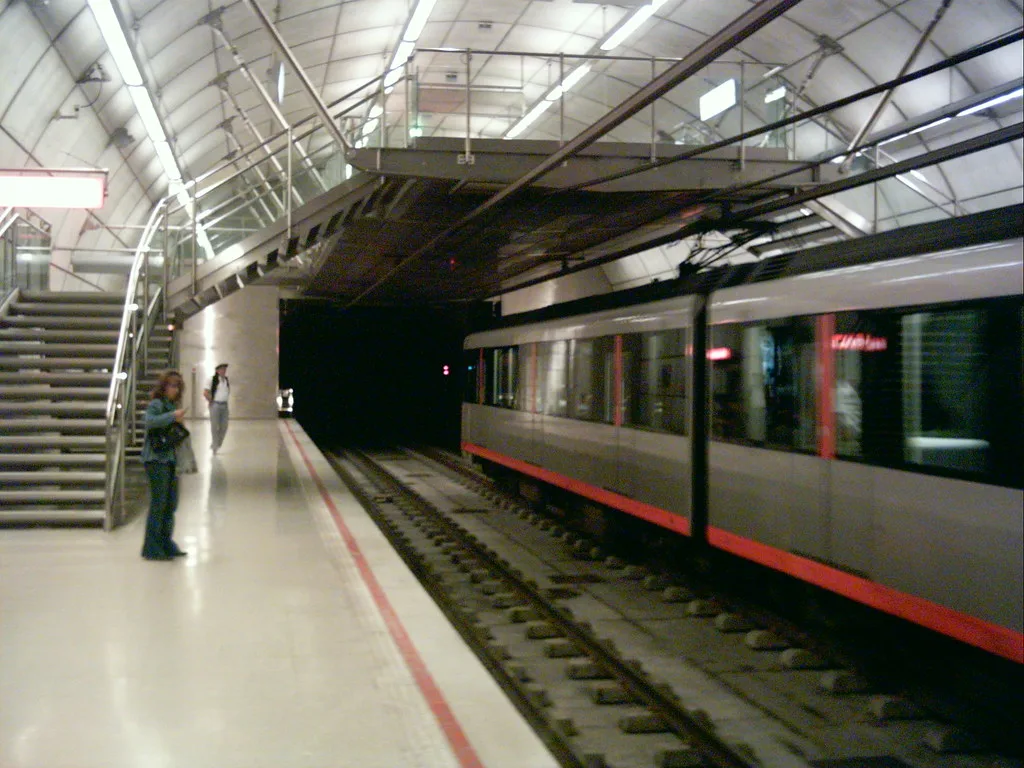
The network consists of three primary lines that form a Y-shape through the metropolitan area. Lines 1 and 2 share tracks through the city center before splitting at San Inazio toward different coastal paths. Line 3 is unique because it is operated by Euskotren and serves the northern neighborhoods of the city. A crucial detail for travelers is the Zazpikaleak/Casco Viejo station, which serves as the main interchange point.
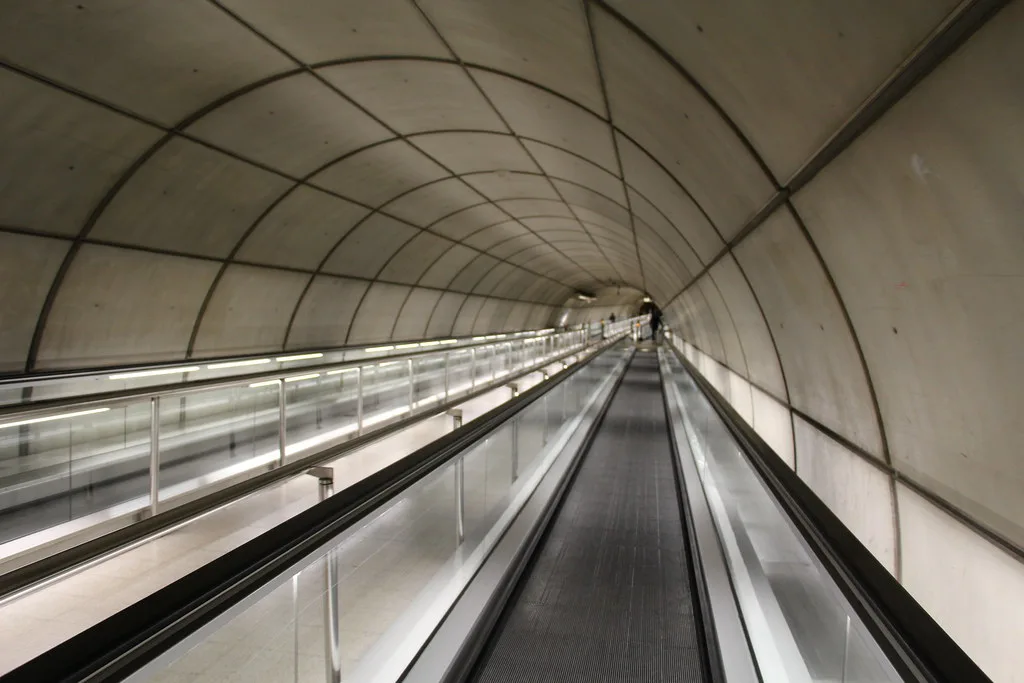
The Bilbao Metropolitan Railway (FMB) manages the first two lines, while Line 3 integrates with the wider regional rail. Transferring between these operators is seamless if you understand the 15-minute free transfer window at Casco Viejo. Most tourists will spend their time on the shared section between the San Mamés and Casco Viejo stations. Trains generally run from 6am until 11pm, with extended service on Friday nights and 24-hour service on Saturdays.
If you are planning a longer trip through Spain, you might also find our guide to Zaragoza public transport useful for your itinerary. Bilbao's system is smaller but carries a high frequency of trains during peak morning and afternoon hours. Waiting times rarely exceed five minutes in the city center during the day, making it highly reliable. The station architecture is iconic, featuring glass canopies that locals affectionately call 'Fosteritos' after architect Norman Foster.
How to Buy Bilbao Metro Tickets at the Station
Every station features red touch-screen vending machines that accept cash, debit cards, and most international credit cards. These machines offer multiple language options, including English, Spanish, Basque, French, and German for easy navigation. You must select your destination zone before paying if you are purchasing a single-use paper ticket. Frequent travelers should prioritize the Barik card to avoid the hassle of buying individual tickets for every journey.
The process is fast, but queues can form at major hubs like Moyua or Abando during festival seasons. I once struggled with a rejected card at a smaller station, so carrying a few Euro coins is always wise. Staff are not always present at every entrance, so the automated machines are your primary point of contact. Always remember to validate your ticket or card at the glass barriers both when entering and exiting.
For those exploring other parts of Europe, we have similar walkthroughs for Bari public transport and other regional hubs. The Bilbao machines are particularly user-friendly compared to older systems found in many other Mediterranean cities. If the machine fails to issue a ticket, look for the 'Interfono' button to speak with a remote operator. Most machines provide change in coins and small bills, but they may reject €50 notes for small purchases.
- Step 1: Select your preferred language
- Touch the flag icon on the bottom left of the screen to choose English.
- This takes about 5 seconds and updates all following menu prompts immediately.
- Avoid guessing Spanish terms as zone selection can be tricky for newcomers.
- Step 2: Choose ticket type or Barik
- Select 'Occasional' for a single ride or 'Barik' to buy or top up a card.
- A single ticket costs roughly €1.70 / ~$1.85 depending on the destination zone.
- Buying a Barik card costs €3 / ~$3.25 but saves significant money over time.
- Step 3: Pick the number of zones
- Check the map on the machine to see if you need Zone 1, 2, or 3.
- Zone 1 is usually sufficient for city center landmarks like the Guggenheim museum.
- Selecting the wrong zone may result in the exit barrier not opening later.
- Step 4: Insert payment and collect ticket
- Insert your card or cash into the illuminated slots on the machine right side.
- Transaction time is usually under 30 seconds for contactless card payments.
- Ensure you take the printed receipt if you need it for travel expense claims.
- Step 5: Validate at the gate
- Tap your card or insert your paper ticket at the glowing green circle.
- The gate opens instantly and displays your remaining balance on the small screen.
- Keep your ticket until you exit the destination station to avoid a fine.
Understanding the Bilbao Metro Zone System
The CTB- Transport System Bizkaia uses a simple three-zone concentric ring model. Zone 1 encompasses the entire municipality of Bilbao, including the Old Town and the modern shopping districts. Zone 2 covers the inner suburbs like Barakaldo, Sestao, and the beautiful coastal area of Getxo. Zone 3 reaches the furthest ends of the lines, such as Plentzia or the industrial zones in Santurtzi.
Pricing scales upward as you cross these boundaries, making it vital to know your destination's zone beforehand. A single ticket for one zone costs €1.70 / ~$1.85, while three zones cost €1.95 / ~$2.10. The price difference is small for single tickets but adds up if you are commuting daily from the coast. Most tourists only need a Zone 1 ticket unless they are visiting the UNESCO-listed Vizcaya Bridge.
Quick Answer: For most visitors, the **Barik** card with **Creditrans** is the best option for cost and flexibility. Single tickets are fine for one-off trips, but the card pays for itself after just four or five journeys. The **Bidai** pass is better for those staying a full month and making over 50 trips.
Single Tickets and Occasional Fares
If you are riding only once or twice, an occasional paper ticket from the red station machines is the simplest option, though it always costs more than the same trip on a Barik card. A single paper ticket is priced by zone and is valid for one journey from the moment you validate at the entry barrier; you must also tap or insert it again to open the exit gate, so keep it until you leave the station. There is also a one-day Day Ticket giving unlimited metro travel for a single calendar day, which is worth it once you make four or more rides in 24 hours.
The table below compares 2026 metro fares for a single journey, showing how much the Creditrans balance on a Barik card saves over the paper price across all three zones. Prices are the standard adult metro fare; reduced Gizatrans and pass rates are covered in the sections below.
| Fare type | Zone 1 | Zone 2 | Zone 3 |
|---|---|---|---|
| Single paper ticket | €1.80 | €1.85 | €1.95 |
| Creditrans (Barik) single | €1.00 | €1.13 | €1.25 |
| Day Ticket (unlimited, 1 day) | €4.90 | ||
| Barik card (one-off issue fee) | €3.00 | ||
The single-fare gap is small in cash terms, but a return trip to the coast on Creditrans saves close to a euro versus paper, and the savings compound fast over a few days of sightseeing. Children under six travel free, and there is no premium for buying contactless on the machine. If you only need one ride from the airport bus or a single hop to the Guggenheim, paper is fine; for anything more, load a Barik card and forget about queuing again.
Pro-Tip — the Casco Viejo 15-minute rule: Transferring between Lines 1/2 (Metro Bilbao) and Line 3 (Euskotren) at Zazpikaleak/Casco Viejo is free, but only if you re-tap your Barik card within 15 minutes of validating. Miss that window and the system charges you a second full journey, so head straight to the connecting platform rather than stopping to explore between taps.
The Barik Card and Creditrans Savings
The **Barik** card is a rechargeable NFC card that acts as the backbone of the local transport system. You can purchase a blank card for €3 / ~$3.25 at any metro station vending machine or 'Kutxabank' ATM. Once you have the card, you load it with a balance called **Creditrans**, which offers discounted fares. A single ride in Zone 1 using **Creditrans** drops to roughly €0.96 / ~$1.05, nearly half the paper price.
One of the best features for families is that a single anonymous **Barik** card is transferable for groups. You can tap the card for up to 10 people at the same station, provided you stay together. This eliminates the need for every family member to buy their own separate card and pay the fee. Just remember to tap once for each person at both the entry and the exit barriers.
I found this particularly helpful when traveling with friends to the beach at Sopela for a day trip. We shared one card and simply passed it back to the next person at the turnstile each time. Be aware that personalized cards with your photo cannot be shared and are for individual use only. Check the balance at any machine to ensure you have enough for the return trip before leaving.
Gizatrans and Temporary Passes: Bidai and Gazte
Seniors and people with disabilities can access the **Gizatrans** fare, which is the cheapest rate available. This requires a personalized **Barik** card and proof of age or disability status from a transport office. The fare is a flat €0.35 / ~$0.38 per journey regardless of how many zones you cross during the trip. It is an incredible value for older travelers exploring the greater Bizkaia region by rail or bus.
For younger travelers under 26, the **Gazte 70** ticket offers 70 journeys over a 30-day period. This is ideal for students or long-term backpackers using Bilbao as a base for exploring the Basque Country. The **Bidai 50** and **Bidai 70** passes are the adult equivalents for those commuting heavily within the month. These passes are significantly cheaper than **Creditrans** if you exceed two journeys every single day.
Large families also benefit from the F20 and F50 discount tiers, which provide 20% or 50% off fares. These discounts must be registered to a personalized card and are often overlooked by eligible residents. If you are just visiting for a weekend, stick to the standard **Creditrans** balance for simplicity. Compare this to our guide on Reims public transport where day passes are often the better deal.
Connecting Metro Routes to Bilbao Attractions
The metro is the most efficient way to reach the Guggenheim Museum via the Moyua station exit. From Moyua, it is a pleasant 10-minute walk down the grand Gran Vía or through the riverside park. Casco Viejo station puts you directly in the heart of the 'Seven Streets' for pintxos and historical sites. The San Mamés station is the essential stop for football fans visiting the world-class Athletic Club stadium.
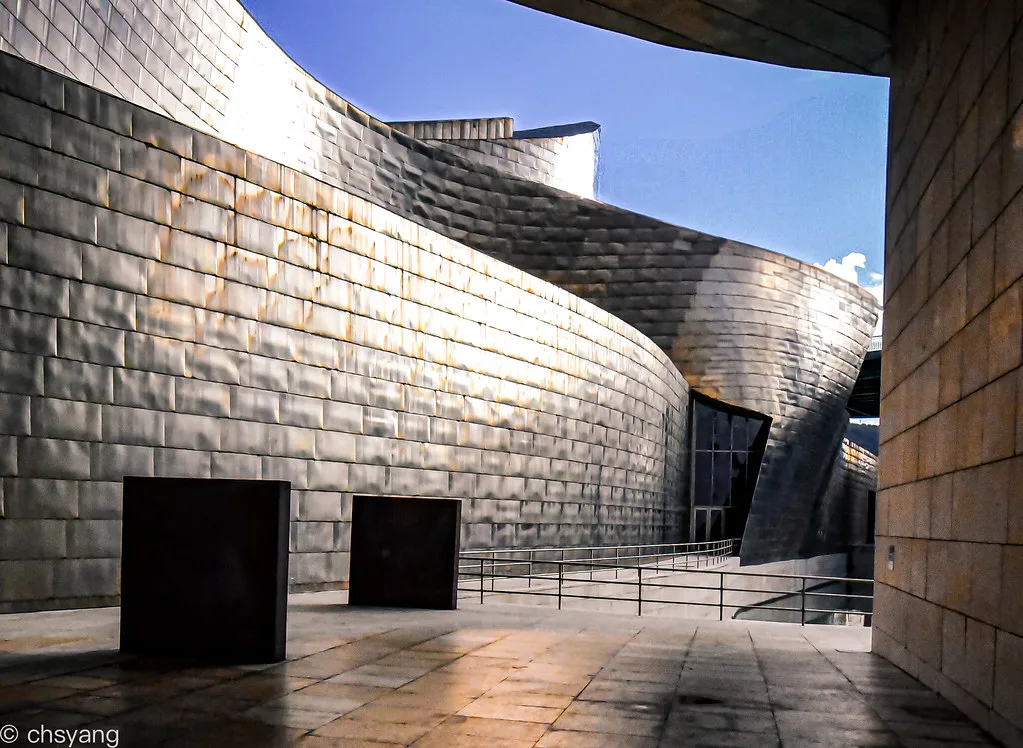
If you want to see the famous Vizcaya Bridge, take Line 2 to the Areeta station in Getxo. The journey takes about 20 minutes from the city center and costs less than €2 / ~$2.15. For a day at the beach, continue on Line 1 to the Plentzia station at the very end. This scenic route offers views of the coastline and is a favorite for locals during the summer months.
We also recommend checking out our Colmar public transport guide if you enjoy walkable European cities. Bilbao's metro stations are clearly marked with signs indicating which exit leads to specific major tourist landmarks. Always look for the 'Irteera' (Exit) signs to find the most convenient street access for your destination. The system is fully accessible for those with limited mobility, featuring elevators at every single station.
Frequently Asked Questions
How many zones are in the Bilbao metro?
The system has three concentric zones. Zone 1 covers the city center, while Zones 2 and 3 reach the suburbs and coast. Most tourists only need Zone 1 for major attractions.
Can I use one Barik card for two people?
Yes, the standard anonymous Barik card is transferable. You can tap it multiple times for a group of up to ten people. Ensure everyone stays together during the trip.
Is the transfer at Casco Viejo free?
Transfers between Lines 1, 2, and 3 are free at Casco Viejo. You must complete the transfer within 15 minutes to avoid being charged for a new journey.
How much is a single metro ticket in Bilbao?
A single paper ticket for Zone 1 costs €1.70 / ~$1.85. Prices increase slightly if you travel to Zone 2 or Zone 3. Using a Barik card reduces this significantly.
Mastering the Bilbao metro routes and tickets is the key to an affordable and stress-free Basque adventure. By grabbing a Barik card early, you save money and gain the freedom to explore the coast and city alike. The system's cleanliness and frequency make it one of the best public transit experiences in Southern Europe. Don't forget to look up at the architecture while you travel through these modern transit hubs.
Whether you are here for the art or the food, the metro connects it all with ease. Plan your routes ahead of time and keep a small balance on your card for spontaneous trips. Enjoy your time in this vibrant city and travel like a local on the 'Fosteritos'.
Free: The European City Transport Cheat Sheet
Airport-to-centre, the best ticket to buy, and the one local gotcha — for 5 European cities, plus the universal rules for trams, ferries, and parking.
You might also like


Continue reading
More guides you'll find useful