Dortmund Public Transport: 10 Essential Things to Know
Master Dortmund public transport with our guide to the Stadtbahn, buses, and airport shuttles. Learn about ticket types, validation rules, and local travel tips.
 By Marco Bellini
On this page
Dortmund Public Transport: 10 Essential Things to Know
Short on time? The decision-first version: Dortmund runs on the Verkehrsverbund Rhein-Ruhr (VRR), and one ticket covers the **Stadtbahn** (U-Bahn), buses, trams, S-Bahn and regional trains. The whole city is fare zone **Preisstufe A**. For a day of sightseeing, buy the 24-StundenTicket (day ticket) for €7.60 — cheaper than two single rides at €3.80 each. From the airport, take the 490 bus (standard VRR fare) instead of the private AirportExpress (€10, not VRR). Always validate paper tickets at the orange Entwerter machine or risk a €60 fine. Staying a month or hopping across the Ruhr region? The nationwide Deutschlandticket (€63/month) beats everything.
Navigating Dortmund public transport is the most efficient way to explore this vibrant city in North Rhine-Westphalia. The system combines modern light rail, extensive bus networks, and regional trains to connect every neighborhood. Whether you are heading to a football match or the city center, understanding the local transit logic saves significant time.
The network operates under the **Verkehrsverbund Rhein-Ruhr** (VRR), ensuring seamless transfers between different modes of travel. You can use a single ticket to switch from a bus to the **Stadtbahn** (metro) without extra costs. This integration makes the city highly accessible for both daily commuters and international visitors.
Free: The European City Transport Cheat Sheet
Airport-to-centre, the best ticket to buy, and the one local gotcha — for 5 European cities, plus the universal rules for trams, ferries, and parking.
The Layout of the Dortmund Transit Network
Dortmund uses a highly organized radial system where most lines converge at the central station or the historic city core. The local operator, DSW21, manages the majority of inner-city services while coordinating with regional partners. You will notice that the city is divided into fare zones, which determine the price of your journey.
Most tourist attractions and hotels sit within the central zone, known as Preisstufe A. This pricing level covers the entire urban area and is usually sufficient for a standard city break. You can find detailed network maps on the Official DSW21 Portal to plan your specific route. Maps are also clearly displayed at every major station entrance.
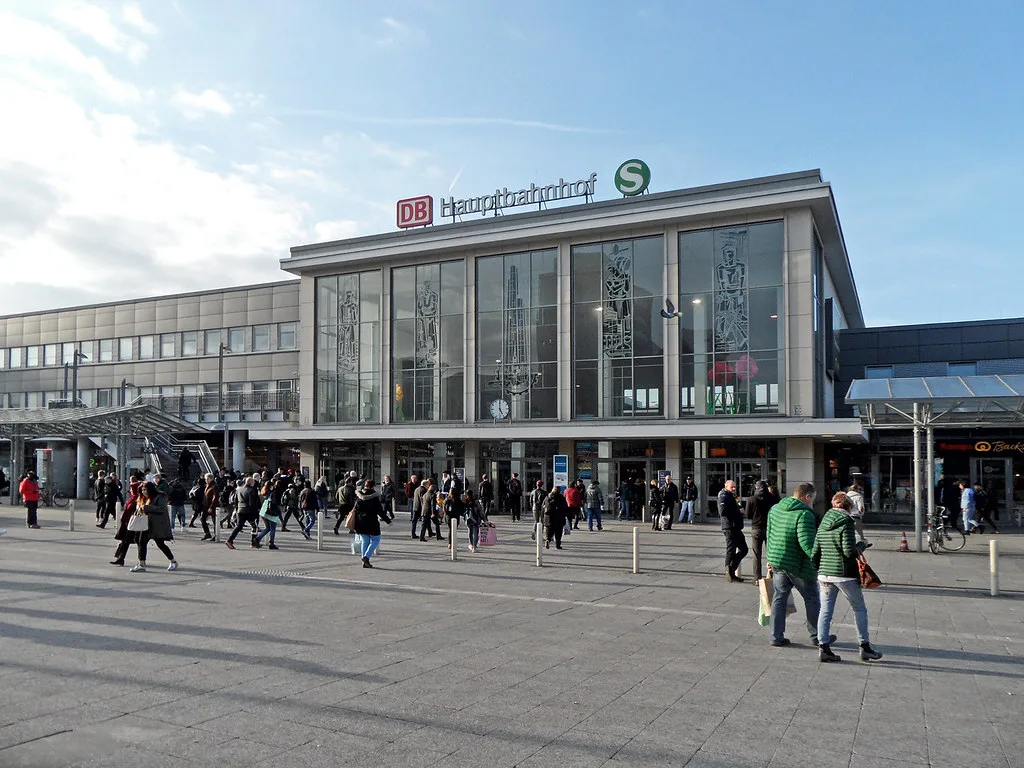
The central hub is the Dortmund Hauptbahnhof, where local lines meet national long-distance trains. From here, you can easily access the pedestrian shopping zones or the cultural U-Tower district. Understanding this layout is the first step toward mastering the local transit rhythm.
Navigating the Dortmund Stadtbahn (U-Bahn)
The **Stadtbahn** (light rail) serves as the backbone of the city, featuring eight distinct lines numbered U41 through U49. These trains run underground in the city center and transition to surface tracks in the suburbs. Most lines operate at ten-minute intervals during the day, providing reliable and frequent service.
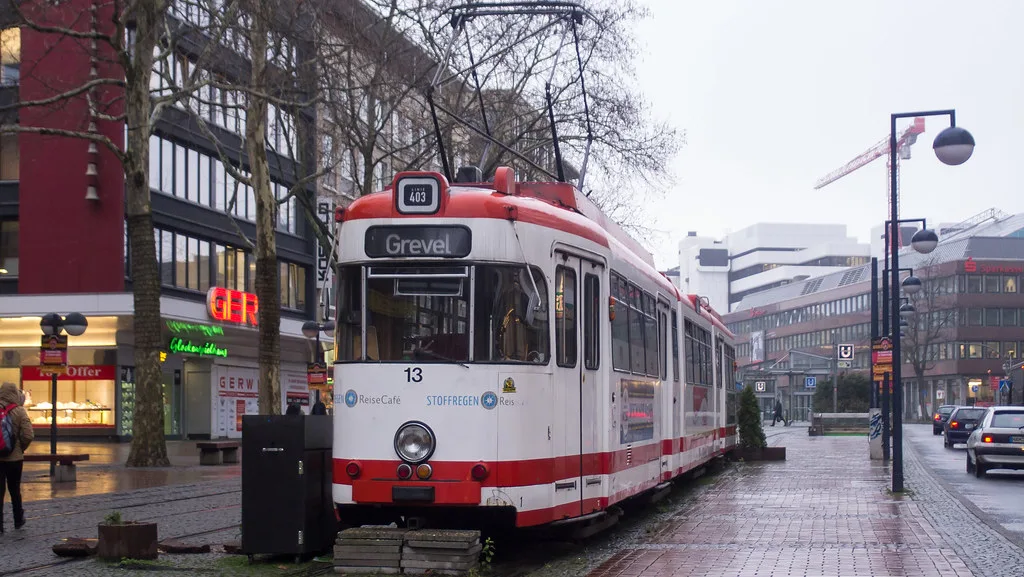
Two major interchange stations, Reinoldikirche and Stadtgarten, act as the primary transfer points for travelers. Reinoldikirche is particularly important for those visiting the main shopping streets or the Christmas market area. If you are exploring various districts, check our travel blog for neighborhood-specific transit tips.
Digital displays on the platforms show real-time arrival data and any potential service disruptions. Always check the destination listed on the front of the train, as some lines share the same platforms in the tunnel. This system is remarkably efficient for reaching Signal Iduna Park on match days.
Using the Local Bus and Tram System
Buses fill the gaps between rail lines, reaching into residential areas and specific industrial landmarks. You must enter through the front door and show your ticket to the driver if boarding after 8:00 PM. During the day, all doors are typically used to speed up the boarding process at busy stops.
Budget note for quick hops: the old **KurzstreckenTicket** (Short Trip ticket) was scrapped in the VRR fare reform and no longer exists in 2026. Instead, use **eezy** in the DSW21 app — you check in when boarding and check out when leaving, and the app charges a distance-based fare that is capped at the normal **EinzelTicket** price of €3.80. For short central hops like Hauptbahnhof to the Westenhellweg shopping district, eezy is usually the cheapest single fare.
Trams still operate in certain parts of the city, though they are often integrated into the Stadtbahn numbering system. Always look for the green 'H' sign, which marks a standard bus or tram stop. These stops usually feature a printed timetable and a small map of the immediate surroundings.
Connecting via S-Bahn and Regional Trains
The **S-Bahn** (suburban train) and regional trains provide faster connections across the wider Ruhr region. These services are operated by Deutsche Bahn's local and intercity trains and use different platforms than the U-Bahn. They are ideal for reaching the University or neighboring cities like Bochum and Essen, and the same VRR logic of zone-based fares mirrors how other German networks work, such as the system covered in our guide to Leipzig public transport.
Regional Express (RE) trains stop only at major stations, making them the quickest way to traverse the city. While these trains look like long-distance transport, your standard VRR tickets are perfectly valid on them. Just ensure you are not accidentally boarding an IC or ICE train, which requires a separate ticket.
The S-Bahn lines, such as the S1 or S2, run frequently and connect the main station to the outer suburbs. These trains offer more luggage space and are generally more comfortable for longer rides. They are a vital part of the broader Dortmund public transport ecosystem for commuters.
Getting to and from Dortmund Airport (DTM)
Reaching the city from Dortmund Airport requires careful attention to the different ticket systems available. The AirportExpress offers a direct non-stop link to the central station in about 25 minutes. However, this service is a private line and costs approximately 10 Euro, which is not covered by standard VRR passes.
For a more budget-friendly option, you can take the 490 bus to the Aplerbeck U-Bahn station. This route uses standard VRR pricing and allows you to continue your journey into the city on the same ticket. You can view the Bus 490 timetable - direction Dortmund Airport (PDF) for precise departure times.
Another alternative is the 440 bus, which connects the airport to the Lütgendortmund area. This is useful for travelers staying in the western parts of the city or those connecting to specific S-Bahn lines. Check the Bus 440 timetable - to Lütgendortmund (PDF) before you land to coordinate your arrival.
Choosing the Right Ticket for Your Trip
Selecting the correct **Fahrkarte** (ticket) depends on how many trips you plan to make in a single day. A **Einzelfahrt** (single ticket) is valid for 90 minutes and allows for transfers in one direction. If you plan to take more than two trips, a **Tageskarte** (day ticket) is almost always the cheaper choice.
Families or small groups should consider the **Gruppentageskarte** (group day ticket) for significant savings. This ticket allows up to five people to travel together for an entire day across the chosen zone. It is much more economical than buying individual passes for every member of your party.
For those staying a full week, the **Wochenkarte** (week ticket) provides the best value for unlimited travel. These tickets are often available as digital versions on your smartphone for convenience. Always verify which Preisstufe you need if you plan to leave the immediate Dortmund city limits.
| Ticket (Preisstufe A) | Price 2026 | Best for |
|---|---|---|
| EinzelTicket (single, adult) | €3.80 | One direct ride within 90 min |
| 24-StundenTicket (day, 1 person) | €7.60 | 2+ trips in a day |
| 24-StundenTicket (group, up to 5) | €7.60 + €5.10 per extra person | Families / small groups |
| eezy (check-in/check-out) | distance-based, capped at €3.80 | Short central hops |
| Deutschlandticket (monthly) | €63.00 | Stays of a week+ or regional travel |
All prices reflect the VRR fare-reform tariff effective 1 June 2026 (Preisstufe A covers the whole Dortmund city area). KinderTickets and reduced fares are cheaper; check the DSW21 price table for the latest figures.
The Deutschlandticket: Germany's Nationwide Flat Fare
The **Deutschlandticket** (Germany Ticket) is the single best deal if you are staying in Dortmund for a week or more. It costs **€63 per month** in 2026 and works on every local bus, tram, **Stadtbahn**, S-Bahn and regional train (RB and RE) across the entire country. That includes all VRR services in Dortmund and the wider Ruhr area.
Crucially, the Deutschlandticket lets you ride out to neighbouring cities like Bochum, Essen and Düsseldorf at no extra cost, since it ignores **Preisstufe** zones entirely. It also works on the local networks of cities further afield, so if your trip continues south you can pair this guide with our advice on Regensburg public transport. It does **not** cover long-distance IC, EC or ICE trains, and the private **AirportExpress** is also excluded. For everything else, it removes any guesswork about which fare zone you need.
You buy it as a digital subscription through the DSW21 app or website, and it auto-renews each calendar month. Cancel by the 10th of a month to stop the next charge, so even a short visitor can take one month and cancel. For occasional travellers a few day tickets are cheaper; cross the ten-ride mark and the Deutschlandticket wins.
How to Purchase Tickets Online and In-Person
Ticket machines are available at every Stadtbahn station and most major bus stops throughout the city. These machines feature a touch-screen interface with multiple language options, including English and Spanish. You can pay using cash, debit cards, or major credit cards at most modern terminals.
The DSW21 mobile app is the most convenient way to manage your travel while on the move. It allows you to buy tickets instantly and provides real-time updates on delays or platform changes. Many travelers find it easier to navigate than the physical machines during busy peak hours.
If you prefer a physical interaction, visit the customer service centers at the Hauptbahnhof or Reinoldikirche. Staff can help you choose the best pass for your itinerary and provide physical network maps. Small kiosks and some lottery shops also sell standard single and day tickets.
The Importance of Validating Your Ticket
Purchasing a ticket is only the first step; you must also validate it to avoid a heavy fine. Look for the small orange machines called **Entwerter** located on the platforms for trains. For buses and trams, these validation machines are usually found inside the vehicle near the doors.
Failure to validate your ticket results in a 60 Euro penalty known as the **Erhöhtes Beförderungsentgelt**. Ticket inspectors often wear plain clothes and carry official identification to catch fare evaders. They will not accept the excuse that you are a tourist or did not understand the rules.
Digital tickets purchased through the app are usually validated automatically at the time of purchase. However, always check the app status to ensure your ticket is active before boarding the vehicle. Physical tickets without a timestamp from the validation machine are considered invalid by inspectors.
Understanding Operating Hours and Night Services
Standard Stadtbahn services typically run from 5:00 AM until approximately 1:00 AM on weekdays. During the night, the **NachtExpress** (NE) bus lines take over to serve the city's main corridors. These buses are specifically timed to help late-night workers and weekend revelers get home safely.
The NE lines usually depart from the city center every hour during the early morning hours. On weekends, the frequency increases to accommodate the nightlife crowds heading to and from various bars. Always check the specific 'NE' schedule on the DSW21 app as routes differ from daytime buses.
If you are traveling from other cities, check our guide on Bari public transport for a comparison of European night systems. Dortmund's night network is particularly robust compared to many other mid-sized European cities. It ensures that the city remains accessible even after the main rail lines have closed.
Essential Rules for Accessibility and Luggage
Dortmund has made significant strides in making its public transport system fully barrier-free for all users. Most Stadtbahn stations are equipped with elevators or ramps to provide easy access for wheelchairs. Low-floor buses and trams are the standard, making boarding simple for those with limited mobility.
Bicycles are allowed on trains and buses, but you must purchase an additional 'Zusatzticket' for your bike. During peak commuting hours, space for bicycles may be restricted to ensure enough room for passengers. Priority is always given to wheelchairs and strollers in the designated multi-purpose areas.
Luggage is generally free of charge as long as it does not block the aisles or doors. If you are traveling with large suitcases, try to use the S-Bahn or regional trains for more space. For more tips on navigating European rail systems, see our guide on Zaragoza public transport.
Frequently Asked Questions
Which Dortmund public transport options fit first-time visitors?
First-time visitors should stick to the Stadtbahn (U-Bahn) for city center travel and the 490 bus for affordable airport transfers. These modes are frequent, easy to navigate, and use standard VRR tickets. For more regional advice, visit our public transport guides.
How do I get from Dortmund Airport to the city center?
You can take the non-stop AirportExpress for 10 Euro or use the 490 bus to Aplerbeck followed by the U47 line. The 490 bus is the cheaper option as it uses standard VRR pricing. Both options depart regularly from the terminal entrance.
Do I need to validate my ticket before boarding in Dortmund?
Yes, you must validate physical tickets at the orange machines on the platform for trains or inside the vehicle for buses. Failure to do so results in a 60 Euro fine. App-based tickets are usually pre-validated upon purchase.
Can I use the same ticket for buses and the U-Bahn in Dortmund?
Yes, all local transit modes in Dortmund are part of the VRR network. A single ticket allows you to transfer between buses, trams, the Stadtbahn, and S-Bahn trains within its validity period. This makes multi-modal trips very convenient.
Mastering Dortmund public transport is a straightforward process once you understand the VRR ticketing logic and validation rules. The combination of the Stadtbahn and the NachtExpress ensures you can navigate the city at any hour. By choosing the right day or group tickets, you can explore the entire region without breaking your budget.
Remember to prioritize the 490 bus for a cheaper airport transfer and always look for the orange validation machines. These small steps prevent the common traveler pitfall of receiving a penalty fare. Whether you are here for a short visit or a long stay, the transit system is your best tool for a smooth experience.
Dortmund continues to invest in its infrastructure, making it one of the most accessible cities in Germany. Keep this guide handy to ensure you always know which line to take and which ticket to buy. Enjoy your time exploring the cultural and sporting highlights of this dynamic German city.
Free: The European City Transport Cheat Sheet
Airport-to-centre, the best ticket to buy, and the one local gotcha — for 5 European cities, plus the universal rules for trams, ferries, and parking.
You might also like

Continue reading
More guides you'll find useful