Freiburg Public Transport: 8 Essential Things to Know
Master Freiburg public transport with our guide to trams, buses, and cycling. Learn about ticket prices, the Regio-Karte, and how to navigate the car-free city center.
 By Marco Bellini
On this page
8 Essential Things to Know About Freiburg Public Transport
Short on time? Here is the quick answer. Freiburg runs on five color-coded VAG tram lines plus connecting buses, all on one ticket system. For a day of sightseeing, skip single tickets and buy a 24h-Karte (24-hour day ticket): €7.20 for one person, or €19.00 for up to five people travelling together (Preisstufe 1, the Freiburg city zone). Staying three days and want the Schauinsland cable car included? Get the WelcomeKarte (€27 adult / €16 child). Driving in? Good news for 2026 — Freiburg scrapped its low-emission zone in May 2025, so you no longer need a green sticker (Umweltplakette).
Freiburg im Breisgau is a global pioneer in sustainable mobility: it prioritized pedestrians and trams over cars decades ago, so the car-free Altstadt is easy to explore on foot or by rail. This guide covers the trams, buses, regional trains, Frelo bikes, exact 2026 fares, and arrival logistics for the Black Forest capital.
Free: The European City Transport Cheat Sheet
Airport-to-centre, the best ticket to buy, and the one local gotcha — for 5 European cities, plus the universal rules for trams, ferries, and parking.
Understand the Freiburg Public Transport System
The efficiency of modern Freiburg public transport is the result of the visionary 1969 Transport Plan. This strategy focused on expanding the tram network while limiting car access to the medieval city center. You will notice that the streets are quiet and the air feels cleaner than in many other European hubs.
Today, the Freiburger Verkehrs AG (VAG) manages a seamless web of trams and buses that cover every major district. Most residents rely on these services for their daily commutes, making the city a model for successfully reducing automobile traffic. The system is designed to be intuitive for international travelers and locals alike.
Environmental protection remains a core value, with many trams running on 100% renewable energy. This commitment has earned the city its reputation as Germany’s environmental capital. Exploring the city via public transit is not just convenient; it is a way to support sustainable tourism.
Travelers can easily transition between different modes of transport at major hubs like the Hauptbahnhof. Similar to other regional systems like Colmar public transport, the focus here is on connectivity and ease of use. Planning your routes ahead of time ensures a stress-free experience in this green metropolis.
Navigate the Tram Network (VAG)
The tram system serves as the backbone of Freiburg mobility, featuring five primary lines that crisscross the city. Each line is color-coded, making it easy to identify your route from a distance. Trams generally run every 6 to 10 minutes during peak daylight hours.
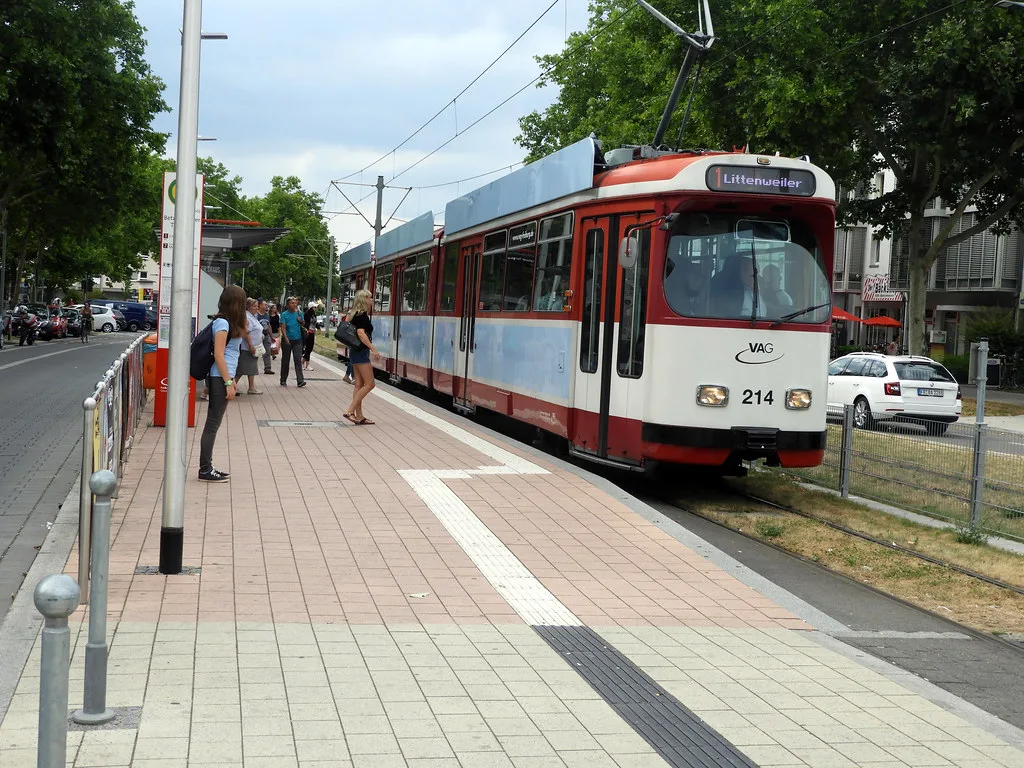
Bertoldsbrunnen acts as the central intersection where all five tram lines meet in the heart of the Altstadt. This historic fountain is the best place to switch directions or begin a walking tour of the shops. Digital displays at every stop provide real-time countdowns for the next arriving vehicle.
Late-night travelers can rely on the 'Safer Way' night service which operates on weekends and before holidays. These trams ensure you can return to your accommodation safely after enjoying the local wine bars. Most vehicles are low-floor models, providing excellent access for strollers and wheelchairs.
Check the route maps posted at every station to verify your direction before boarding. You must have a valid ticket before entering the tram, as random inspections are frequent and carry heavy fines. If you are exploring other European cities, you might find this layout similar to Dijon public transport structures.
Use Bus Services and Regional Connections
Buses in Freiburg complement the tram lines by reaching the quieter residential hills and outlying villages. The Südbaden Bus (SBG) network extends even further, connecting the city to the dense forests of the Schwarzwald. These routes are essential for hikers looking to reach remote trailheads without a rental car.
The Breisgau S-Bahn provides fast regional train links that function like an express metro for the surrounding area. You can use these trains to reach nearby towns like Breisach or Kirchzarten in under twenty minutes. Most local transport tickets are valid on these S-Bahn trains within the city zones.
Reaching the Schauinslandbahn cable car requires a short bus ride from the end of tram line 2. This iconic cable car takes you to the summit for panoramic views of the Rhine Valley and the Alps. Always check the seasonal operating hours for the cable car before heading out for the day.
Regional connections make Freiburg a perfect base for exploring the tri-border area of Germany, France, and Switzerland. If you enjoy well-connected regional hubs, you may also find Reims public transport helpful for your future European itineraries. Consistency in regional planning makes these cities highly accessible.
Explore by Bike in Germany’s Cycling Capital
Freiburg is famously known as a bicycle capital, with over 400 kilometers of dedicated cycling paths. The terrain is mostly flat in the city center, making it ideal for casual riders of all ages. Many locals choose bikes over cars for any journey under five kilometers.
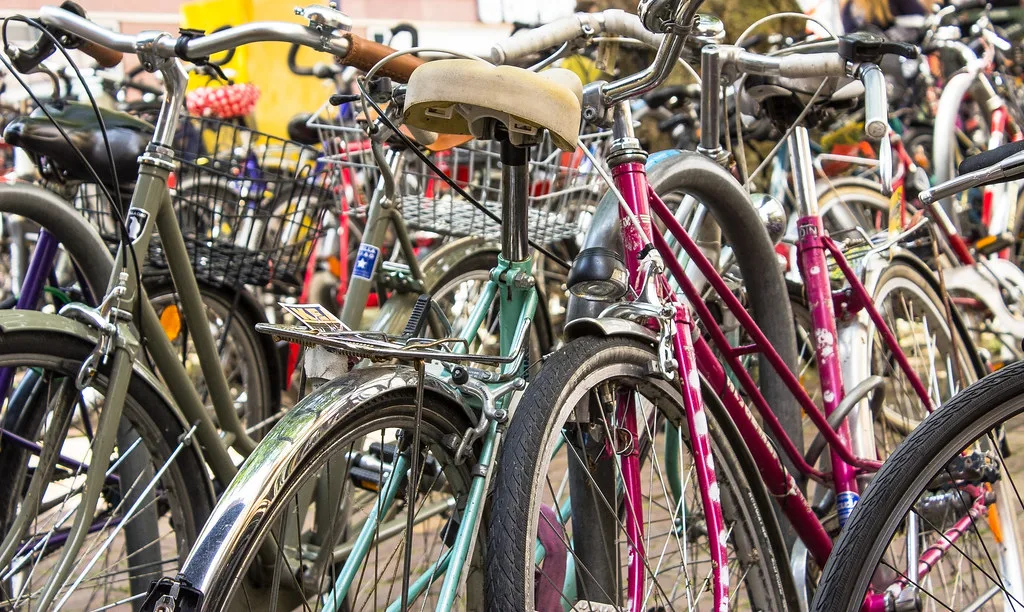
Frelo is the city’s official bike-sharing system, operated in partnership with Nextbike. You can find these bright blue bikes at over 80 stations located near tram stops and major landmarks. Registration is quick via the app, and the first 30 minutes are often discounted for transit pass holders.
Safe bike parking is available throughout the city, including the large 'Radstation' at the main train station. This facility offers secure storage, a repair shop, and even bike washing services for a small fee. Always use a sturdy lock, even if you are only stepping away for a few minutes.
Comparing the tram to a bike often comes down to the weather and your specific destination. While the tram is better for long distances, a bike allows you to explore the narrow lanes of the Gerberau district. Many travelers find that a mix of both modes provides the most flexibility.
- Frelo Bike Sharing Details
- Type: Smart-lock rental bikes
- Best for: Short city hops
- Where: 80+ stations citywide
- Cost: ~€1 per 30 mins
Master Tickets, Pricing, and Booking
Understanding ticket types is vital for getting the best value out of Freiburg public transport. A single ticket (Einzelfahrschein) in the city zone (Preisstufe 1) costs €3.00 from a machine, or €2.70 if you buy it in the VAG mobil or RVF app, and it is valid for one continuous 60-minute trip in one direction — no return journeys. For all-day sightseeing, the 24h-Karte day ticket (€7.20 solo) pays for itself after just three rides.
The Regio-Karte is the monthly season pass for the entire RVF network — best value only if you are staying several weeks. For most visitors the smarter buys are the 24h-Karte for groups (€19.00 for up to 5 people) or, for a 3-day stay, the WelcomeKarte, which adds free Schauinslandbahn cable-car rides, free Frelo bike rental, and free city-museum entry on top of unlimited tram and bus travel.
| Ticket | 2026 price (zone 1) | Best for |
|---|---|---|
| Single (Einzelfahrschein) | €3.00 machine / €2.70 app | One short one-way hop |
| 24h-Karte (solo) | €7.20 | A full day of sightseeing alone |
| 24h-Karte (up to 5 people) | €19.00 | Families / small groups for a day |
| 3-day WelcomeKarte (adult) | €27 (child €16) | 2–3 day stay + Schauinsland cable car |
| Regio-Karte (monthly pass) | Season pass | Long stays / residents |
You can purchase tickets from automated machines at tram stops, which usually offer English language options. These machines accept coins, small bills, and most major credit cards with a chip. For personal assistance, visit the VAG Plus-Punkt service center near the Martinstor gate.
Consult the city guide “Freiburg für alle” for detailed accessibility information regarding ticket offices. Always remember to validate your paper ticket in the small orange machines if it wasn't pre-validated at the point of purchase. Failure to validate is treated the same as having no ticket at all.
Get the Right Tourist Card: KONUS and WelcomeKarte
Many visitors overpay because they never hear about the KONUS Guest Card (Gästekarte). If you stay overnight at a participating hotel, guesthouse, or campsite anywhere in the Black Forest region, you receive this card for free — and it gives you unlimited free travel on all VAG trams and buses plus regional RVF/SBG buses and trains for the entire length of your stay. Ask for it at check-in; it is the single biggest money-saver for tourists and answers the common question of whether transport is "free" in Freiburg.
If your accommodation is not in the KONUS network, the 3-day WelcomeKarte (€27 adult, €16 child up to 14) is the best stand-alone tourist ticket. Beyond unlimited tram and bus rides it bundles a free round trip on the Schauinslandbahn cable car, free Frelo bike rental, free entry to the municipal museums, and €2 off guided city tours — easily worth more than its price if you ride the cable car even once.
For a single packed sightseeing day, the 24h-Karte (€7.20 solo / €19.00 for up to five people) remains the simplest choice. Whatever card you hold, you do not re-validate it each ride — only paper single tickets bought unstamped need stamping in the small orange validators on board.
Plan Your Arrival by Train, Bus, or Car
Freiburg Hauptbahnhof (Hbf) serves as the primary gateway for travelers arriving by rail. High-speed ICE trains connect the city to Frankfurt, Zurich, and Berlin multiple times per day. The station is centrally located, just a ten-minute walk from the historic cathedral.
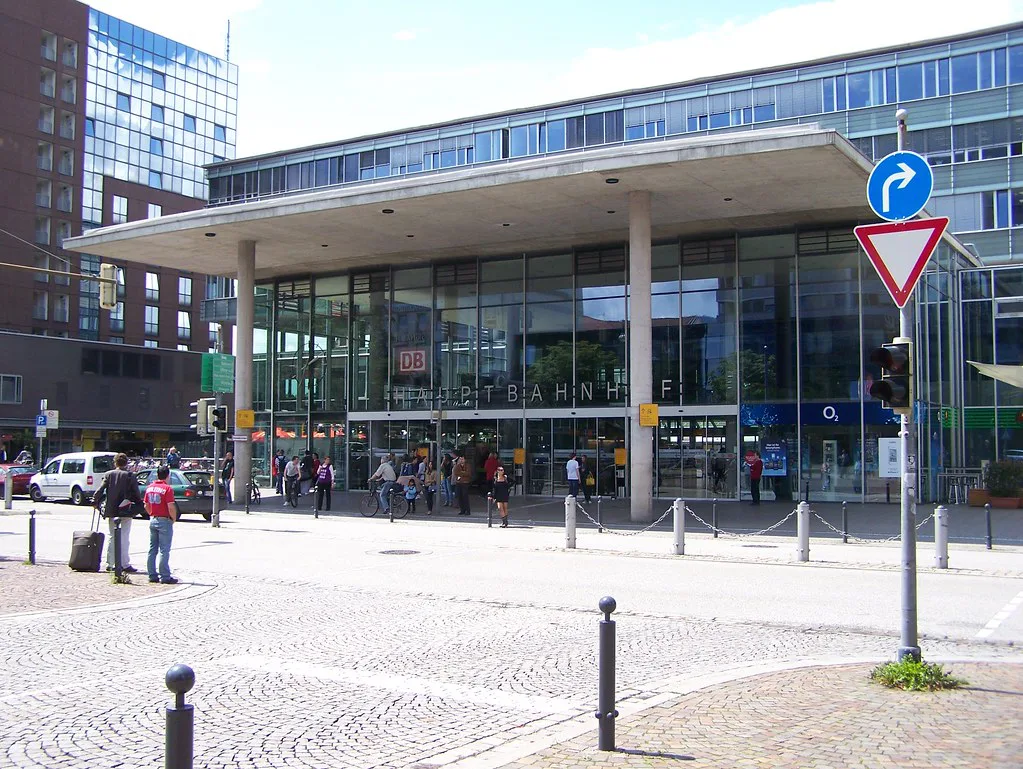
Long-distance buses like FlixBus stop at the international bus terminal located right behind the main train station. This area is well-connected to the tram network via a pedestrian bridge over the tracks. It is a cost-effective way to reach Freiburg from cities like Strasbourg or Basel.
Drivers arriving via the A5 Autobahn will find one rule has eased for 2026: Freiburg lifted its low-emission zone (Umweltzone) on 2 May 2025, so you no longer need a green sticker (Umweltplakette) to drive into the city — air quality had improved enough to retire the requirement. Note that a 30 km/h speed limit still applies on the B31 through-road for noise reasons. Parking in the center remains expensive and limited, so using peripheral garages or Park & Ride is highly recommended.
If you are arriving from southern Europe, you might notice different logistics compared to Bari public transport hubs. Freiburg’s infrastructure is heavily integrated, making the transition from a long-distance train to a local tram very smooth. Follow the 'Stadtbahn' signs to find the local platforms.
Respect Pedestrian Zones and Parking Rules
The Altstadt is a strictly enforced pedestrian zone where cars are largely prohibited. This area is perfect for wandering through the 'Bächle'—the small water-filled runnels that line the streets. Be careful not to step into them, as local legend says you will end up marrying a Freiburger if you do.
To avoid the hassle of city driving, use the Park and Ride (P+R) lots located at the city's edge. These lots offer free or low-cost parking when combined with a valid transit ticket. Locations like P+R Bissierstraße provide direct tram links into the center in under ten minutes.
Freiburg has maintained 30 years of planning continuity to keep the city center walkable. Unauthorized driving in the pedestrianized Altstadt results in immediate fines and potential towing — the old 'Umweltzone' green-sticker checkpoints are gone as of May 2025, but the car-free zone itself is strictly enforced. Watch for the 'Fußgängerzone' (pedestrian zone) signs around the cathedral quarter.
Parking garages are available near the Schlossberg and the university for those who must drive. However, these fill up quickly on Saturdays when the cathedral market is in full swing. For a smoother visit, leave your vehicle at your hotel and utilize the superior public transport guides available for the region.
Use Local Mobility Apps and Service Providers
The VAG mobil app is an essential tool for any modern traveler in the city. It provides a door-to-door trip planner that includes tram, bus, and even Frelo bike availability. You can buy digital tickets directly through the app to avoid fumbling with cash at machines.
Real-time data ensures you know exactly when your transport will arrive, accounting for any minor delays. The app also highlights accessible routes for those traveling with heavy luggage or mobility aids. It is the most efficient way to navigate the city's complex network of lines.
Beyond VAG, other mobility service providers offer car-sharing options like Stadtmobil for longer day trips. These services are integrated into the city’s broader 'Green City' initiative. Having all these options at your fingertips makes exploring the Black Forest incredibly convenient.
If you are planning a broader European trip, check out our resources on Zaragoza public transport or Trapani public transport. Digital tools are becoming the standard across the continent, making travel more accessible for everyone. Download the local Freiburg apps before you arrive to hit the ground running.
Frequently Asked Questions
How do I pay for the tram in Freiburg?
You can pay for the tram using the VAG mobil app or at ticket machines located at every stop. Machines accept cash and credit cards. Always remember to validate paper tickets in the orange boxes on board. For more travel tips, visit our blog.
Is public transport free for tourists in Freiburg?
Public transport is not free for all, but many hotels offer the KONUS Guest Card. This card provides free travel on buses and trains throughout the Black Forest region for the duration of your stay. Check with your accommodation provider before purchasing separate tickets.
What is the Regio-Karte in Freiburg?
The Regio-Karte is a monthly or weekly pass that offers unlimited travel within the RVF network. It is highly cost-effective for commuters or long-term visitors. The pass covers all trams, local buses, and regional trains in the Freiburg area and surrounding districts.
Can I use a credit card on Freiburg buses?
Most modern buses in Freiburg allow for contactless payment or credit card purchases via the driver. However, using the VAG mobil app is often faster and more reliable. It is always wise to carry a small amount of cash just in case of technical issues.
Freiburg public transport is a shining example of how a city can prioritize people and the environment. From the silent trams to the extensive bike paths, every element is designed for ease and sustainability.
By choosing the tram or a Frelo bike, you contribute to the city's green mission while enjoying a stress-free visit. We hope this guide helps you navigate the streets of Freiburg with confidence and ease.
Enjoy your time exploring the historic Altstadt and the beautiful Black Forest trails. With a Regio-Karte or the VAG app in hand, the entire region is yours to discover in 2026 and beyond.
Free: The European City Transport Cheat Sheet
Airport-to-centre, the best ticket to buy, and the one local gotcha — for 5 European cities, plus the universal rules for trams, ferries, and parking.
You might also like


Continue reading
More guides you'll find useful