Grenoble Tram Map: The Complete Public Transport Guide
Download the latest Grenoble tram map and learn how to navigate the city with our guide to lines, tickets, M TAG apps, and park-and-ride facilities.
 By Marco Bellini
On this page
Grenoble Tram Map: The Complete Public Transport Guide
Short on time? Grenoble's tram network has five lines (A–E) run by M TAG, all converging near the central SNCF station ('Gares' stop). Download the official map as a PDF from tag.fr, buy a single ticket for ~€1.70 (valid 1 hour with transfers) or a 10-trip carnet for €17.00, and always validate before boarding — fines apply even with a valid un-scanned ticket. Lines A and B are the two you'll use most as a visitor: both call at 'Gares' and the city center.
Navigating the capital of the French Alps becomes effortless once you master the local transit system. The city features a modern, efficient network that connects the historic center with the sprawling university campus and mountain suburbs. A clear Grenoble tram map is your most essential tool for exploring everything from the Bastille cable car to the innovative Presqu'île district. Managed by M TAG, it includes five tram lines and dozens of bus routes serving the entire metropolitan area, and this guide covers the latest maps, ticketing tips, and local insights to help you travel like a resident.
Free: The European City Transport Cheat Sheet
Airport-to-centre, the best ticket to buy, and the one local gotcha — for 5 European cities, plus the universal rules for trams, ferries, and parking.
Grenoble Tram Map: Current Network Overview
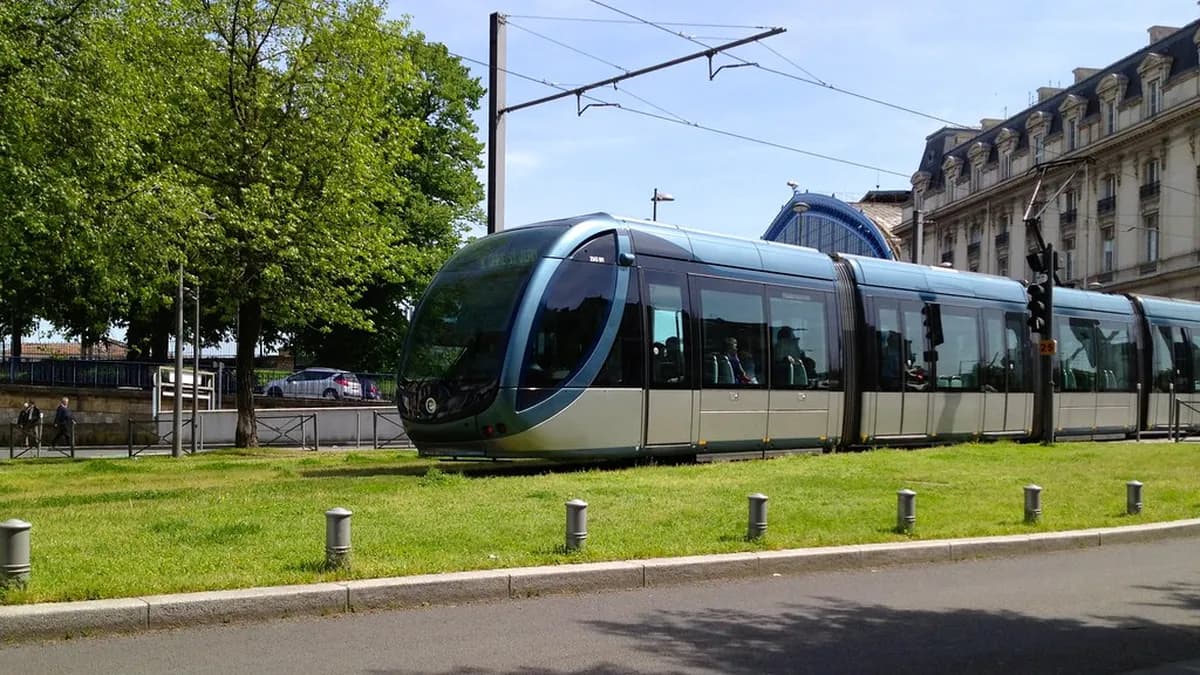
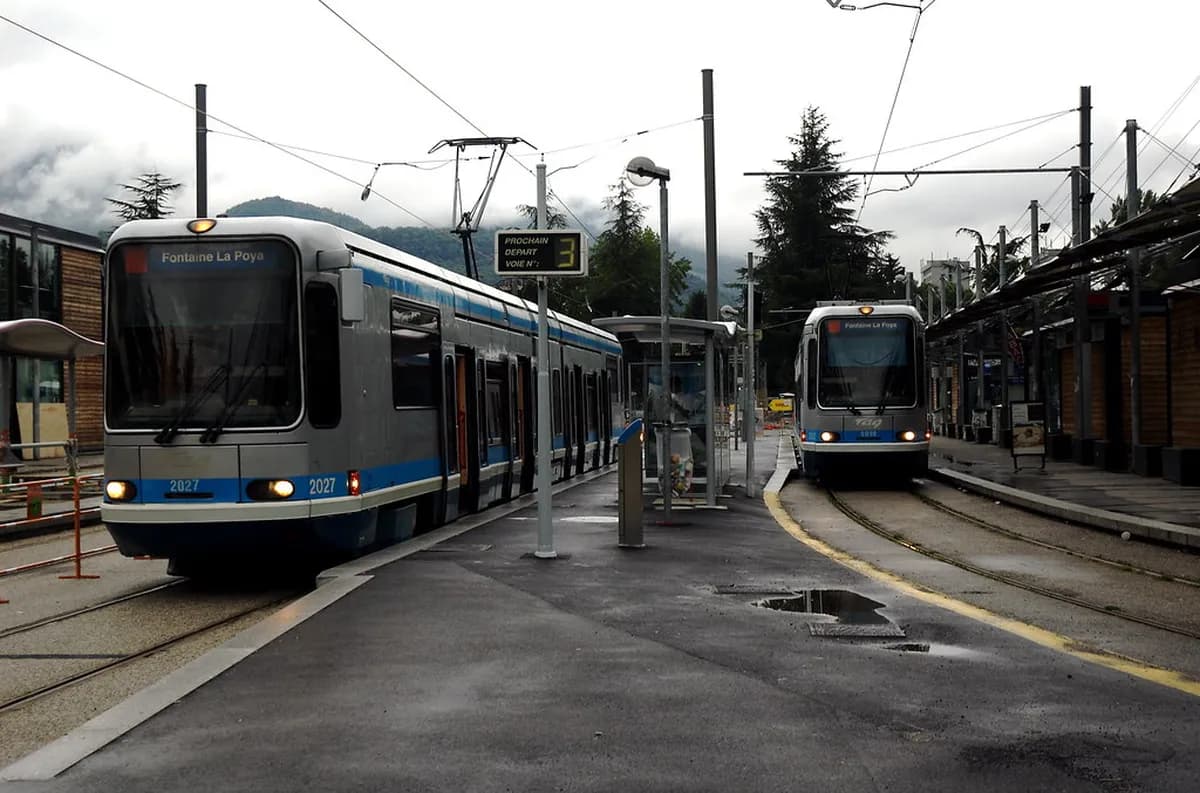
The public transport network of Grenoble Alpes Métropole is designed around a star-shaped tramway system. Five distinct lines, labeled A through E, crisscross the city to ensure no major district remains isolated. You can view or download the latest digital version on the M TAG Official Site for real-time updates.
Most lines converge near the city center, making the 'Hubert Dubedout - Maison du Tourisme' stop a vital junction. If you are coming from other cities like those featured in our Strasbourg tram guide, you will find Grenoble's layout very intuitive. Maps are clearly posted at every single station, showing both the immediate surroundings and the full metropolitan reach. For a wider view that pulls in the buses and connecting services alongside the tram, see our full Grenoble public transport guide.
The network operates from early morning until roughly 1:00 AM, providing reliable coverage for both workers and night owls. During the day, trams typically arrive every 3 to 5 minutes on the busiest central sections. Look for the large 'M' logo on station totems to identify tram stops from a distance.
Tramway Lines in Grenoble: Routes and Key Stops
Line A is the backbone of the system, connecting the western suburbs to the eastern Pole Sud shopping district. It serves the main SNCF train station and the bustling Victor Hugo square in the heart of town. Commuters frequently use this line to reach the Alpexpo exhibition center or the Grand'Place mall.
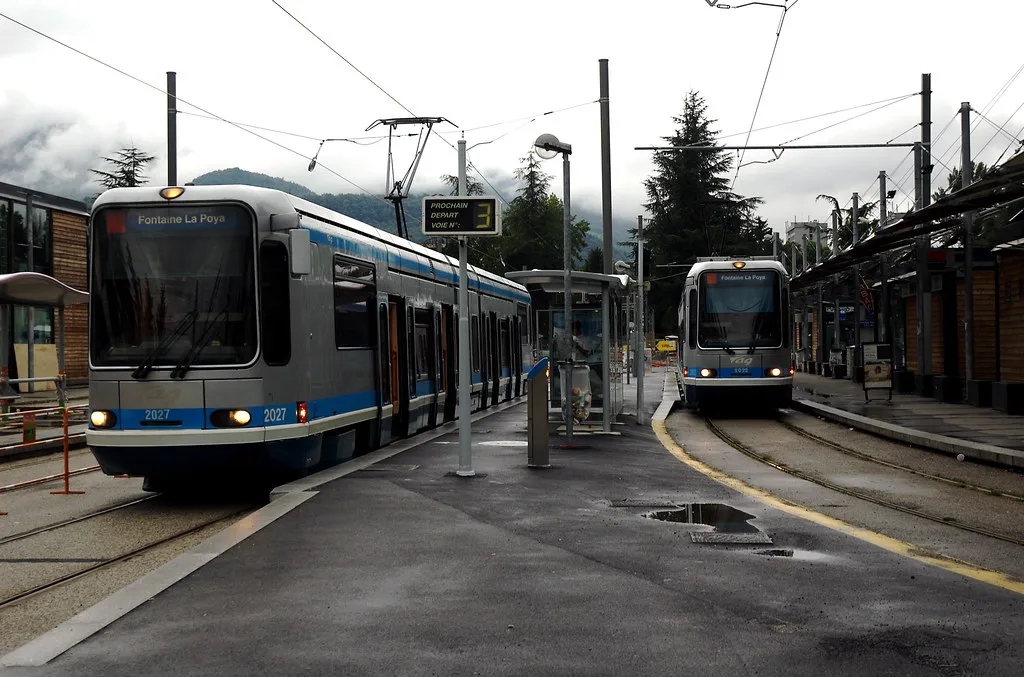
Line B runs from the Oxford scientific peninsula through the city center toward the sprawling University of Grenoble Alpes (UGA) campus. Students often rely on this route, which also stops at the central hospital in La Tronche. If you are visiting for research or academic purposes, the UGA Campus App offers specialized navigation for this area.
Lines C, D, and E provide essential cross-town and suburban links that bypass the densest central bottlenecks. Line C connects the Seyssins area to the campus, while Line E serves the northern corridor toward Fontanil-Cornillon. These routes are often less crowded than Lines A and B during the midday lull.
- Line A: Blue Route
- Primary stops: Gares, Grand'Place
- Frequency: 3-6 minutes
- Connects: Fontaine to Échirolles
- Line B: Green Route
- Primary stops: Gares, Sainte-Claire
- Frequency: 4-7 minutes
- Connects: Presqu'île to Gières
- Line C: Pink Route
- Primary stops: Chavant, Vallier
- Frequency: 5-9 minutes
- Connects: Seyssins to Campus
The Bus Network and Flexo Service
While the tram is the star, the bus network handles the vital 'last mile' of many journeys. Chrono lines (labeled C1 to C7) offer high-frequency service similar to trams, with dedicated lanes to avoid traffic. Proximo and Flexo lines extend deep into the mountains and smaller residential pockets where tracks cannot reach.
The Flexo service is particularly unique as it operates on a semi-on-demand basis in lower-density areas. You may need to call ahead or use the app to trigger a pickup at certain stops during off-peak hours. This flexibility ensures that even remote parts of the Isère area remain accessible to non-drivers.
Night travel is supported by the 'Noctibus' service, which takes over when the standard lines cease operations. These buses primarily serve the student districts and the city center on weekend nights. Always check the specific night schedule on the M TAG app before heading out for the evening.
Tickets, Travel Passes, and Useful Apps
Grenoble uses a unified ticketing system that works across all trams and M TAG buses (the network is branded 'M réso', spanning the Métropole, Grésivaudan, and Voironnais). A single trip ticket costs approximately €1.70 and remains valid for one hour of transfers. Purchasing a 10-trip 'carnet' for €17.00 is a smarter move for tourists, as it significantly lowers the price per journey and is transferable between people.
Validation is mandatory before you board a tram or immediately upon entering a bus. Look for the yellow or grey machines on the tram platforms to scan your ticket or smartphone code. Failure to validate can result in a hefty fine, even if you have a valid un-scanned ticket in your pocket.
The M TAG app is the most convenient way to manage your travel while on the move. It allows you to buy digital tickets and view a live Grenoble tram map with real-time vehicle positions. For those without the app, sending a text message to the local shortcode provides a quick 'SMS Ticket' for immediate use.
- Single Trip Ticket
- Cost: ~€1.70
- Validity: 60 minutes (transfers included)
- Transferable: Yes
- 10-Trip Carnet
- Cost: €17.00
- Best for: Weekend visitors
- Note: Transferable between travellers
- Pass Journée (Day Pass)
- Cost: €6.40
- Best for: Heavy sightseeing
- Usage: Unlimited for 24h from first validation
| Ticket type | Price (2026) | Validity | Best for |
|---|---|---|---|
| Single trip | ~€1.70 | 60 min, transfers included | One-off short hops |
| Single bought from bus driver | €2.00 | 60 min, transfers included | Backup when machines are out |
| 10-trip carnet | €17.00 (~€1.70/trip) | Per validation | Weekend visitors, shareable |
| Pass Journée (day pass) | €6.40 | 24h from first validation | Heavy sightseeing days |
| SMS Ticket | billed to phone | 1 hour | Broken-machine emergencies |
Getting Around by Public Transport or Bicycle
Grenoble is famously flat, making it one of the most bike-friendly cities in all of France. The metropolitan authority encourages cycling through the 'Mvélo+' rental scheme, recognizable by their bright yellow bikes. You can find these rental hubs near major tram stops like the Gares or the University campus.
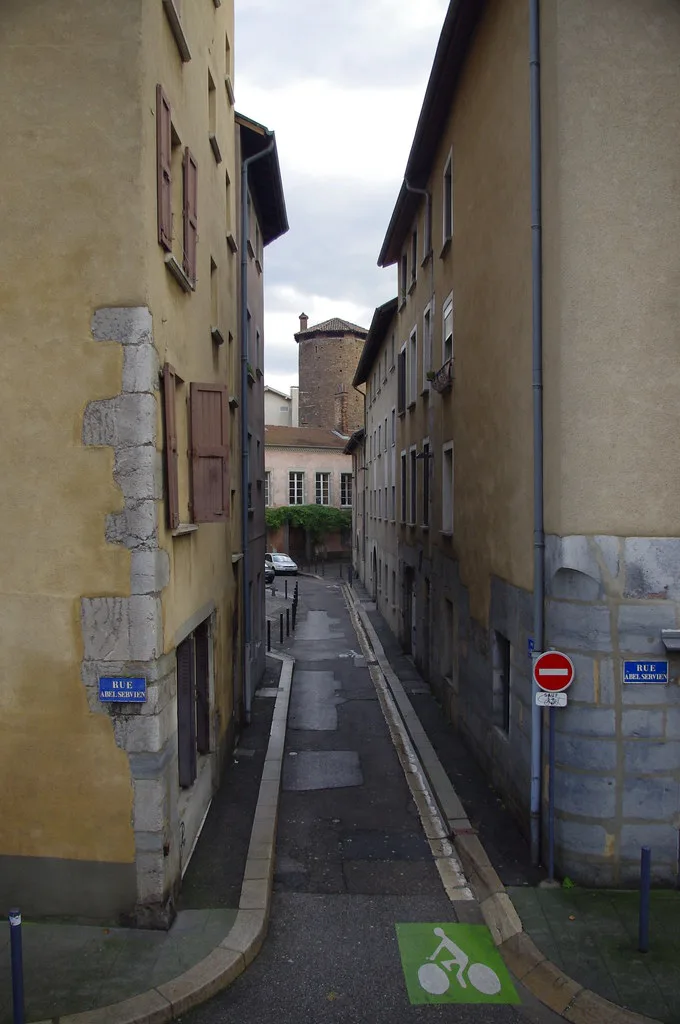
Cycling infrastructure often runs parallel to tram lines, providing a safe and fast alternative to motorized transport. Check the Grenoble Alpes Métropole - Cycling Info for a detailed map of protected paths. Many residents combine modes by cycling to a tram stop and using secure bike lockers located at the station.
Trams do allow bicycles on board, but strictly during off-peak hours to ensure passenger comfort. Avoid bringing your bike on the tram during the 7:30 AM to 9:00 AM and 4:30 PM to 6:30 PM windows. Always use the designated doors at the ends of the tram cars when traveling with a bicycle.
Free Public Transport in Grenoble: Saturdays Before Christmas
A unique local policy makes public transport free on the four Saturdays leading up to Christmas. This initiative aims to reduce city center congestion and support local merchants during the holiday rush. You do not need to validate any ticket or show a pass during these specific designated days.
The free service applies to the entire M TAG network, including all five tram lines and city buses. It is an excellent time to visit the Christmas markets at Place Victor Hugo without worrying about parking. Expect higher than usual crowds, so plan your trips for the morning hours to secure a seat.
This policy is part of Grenoble's broader commitment to sustainable urban mobility and ecological transition. By removing the cost barrier, the city successfully encourages thousands of drivers to leave their cars at home. Always verify the exact dates for 2026 on the official transport website as the holiday calendar shifts slightly.
Getting Around Grenoble and beyond: Coaches and Park-and-Ride
For those driving into the city from the Grésivaudan or Voironnais valleys, Park-and-Ride (P+R) facilities are essential. These 'Parking-Relais' lots allow you to park your car for free if you have a valid M TAG ticket. Most P+R sites are located at the terminus of tram lines, such as the 'Seyssins Le Prisme' or 'Gières Plaine des Sports' stops.
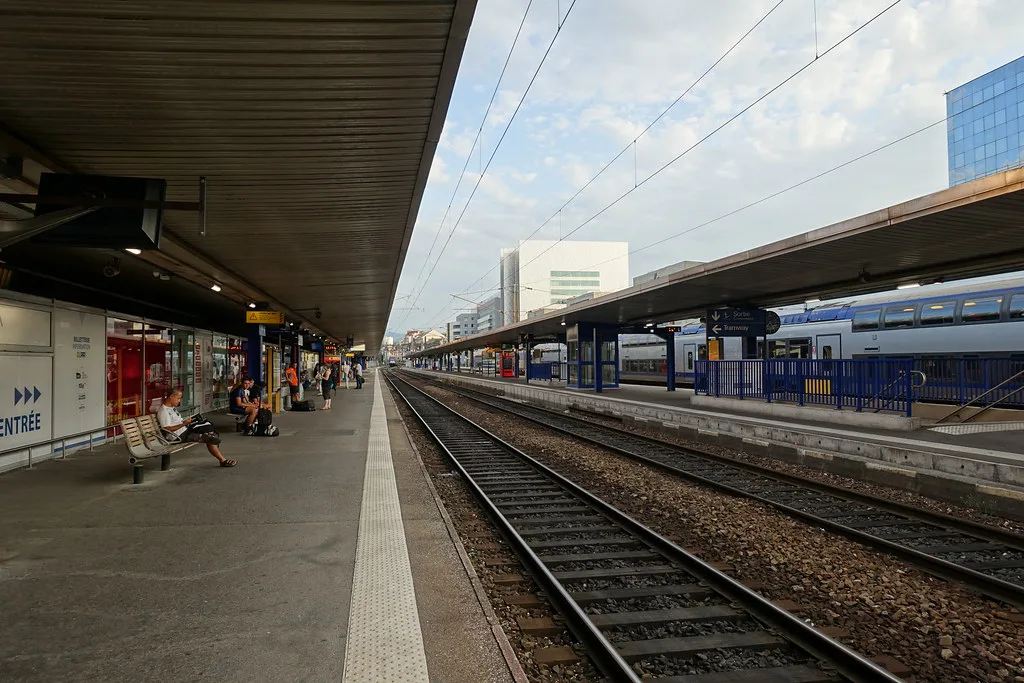
Regional travel is facilitated by the SNCF TER Auvergne-Rhône-Alpes rail network. Trains connect Grenoble to Lyon, Chambéry, and Valence in under 90 minutes, and our guide to getting around Chambéry covers the local network at the other end of that line. If you are planning a longer journey, our Clermont-Ferrand tram guide offers similar tips for exploring central France.
Transisère coaches provide further reach into the mountain massifs like the Vercors or Chartreuse. These buses depart from the 'Gare Routière' located right next to the main railway station. Using a combination of coach and tram is often the only way to reach popular hiking trailheads without a private vehicle.
Connecting from the Airport to the Tram Network
There is no direct tram to either airport, so every air arrival becomes a two-leg journey: a coach or shuttle to the central 'Gares' interchange, then Tram A or B into town. Plan for the transfer time rather than expecting to step off the plane onto a tram platform.
From the small Grenoble Alpes Isère airport (GNB) at Saint-Étienne-de-Saint-Geoirs, the ACTIBUS shuttle meets seasonal flights and runs to the Gare Routière beside the main station in about 45 minutes, costing roughly €15.50 one-way (children 2–12 about €13). Once at the station, walk to the 'Gares' tram stop and take Line A or Line B toward the center.
Most international visitors actually land at Lyon Saint-Exupéry (LYS), about 90 minutes away. From there, the half-hourly Transaltitude / Ouibus coach runs straight to Grenoble's Gare Routière for around €17–24, again connecting to Tram A or B at 'Gares'. Buy coach tickets in advance online, as the airport counter can be unattended outside peak ski-season hours.
A Brief History: The Evolution of Public Transport in Grenoble
Grenoble holds a special place in French history as a pioneer of the modern tramway. In 1987, it became one of the first cities in France to reintroduce trams after they were largely dismantled in the mid-20th century. The city was also the first in the world to introduce low-floor tram cars for improved accessibility.
This focus on accessibility set a new standard for urban design across Europe. Today, the network is often compared to other innovative systems like the Angers tram for its integration into the urban fabric. The evolution continues with recent expansions of Line E and the modernization of older rolling stock.
The SMMAG authority now oversees the strategic growth of the network to meet future climate goals. Future plans include extending existing lines and improving the frequency of peripheral bus routes. Understanding this history helps visitors appreciate the high quality of the current infrastructure.
Useful Information for Using Public Transport in Grenoble
Peak hours in Grenoble are typically between 7:30 AM and 9:00 AM, then again from 4:30 PM to 6:30 PM. Trams can become very crowded during these times, especially on Line B near the university. If your schedule is flexible, traveling between 10:00 AM and 3:00 PM offers a much more relaxed experience.
The 'SMS Ticket' is a lifesaver if you find yourself at a stop with a broken ticket machine. Simply text '1H' to 93123 to receive a digital ticket valid for one hour on your phone. The cost is deducted from your mobile phone bill, making it perfect for spontaneous trips.
Always keep your validated ticket until you have completely exited the tram station or bus. Ticket inspectors frequently operate in groups and check every passenger on a vehicle. Respecting the quiet zones and giving up seats for elderly passengers is standard local etiquette.
Frequently Asked Questions
Where can I download the Grenoble tram map?
You can download the latest Grenoble tram map directly from the official M TAG website. It is available in PDF format for offline use on your phone. Most stations also provide printed maps at the information desks located near the main train station.
How much does a tram ticket cost in Grenoble?
A single trip ticket costs approximately €1.70 when purchased from a machine or the app. If you buy a ticket from a bus driver, the price increases slightly to €2.00. For the best value, consider a 10-trip pass or a 24-hour unlimited ticket.
Is public transport free in Grenoble on weekends?
Public transport is generally not free on weekends, except for the four Saturdays before Christmas. During this holiday period, all trams and buses are free to encourage local shopping. On all other weekends, standard ticketing rules and prices apply across the entire network.
How do I get from the Grenoble train station to the University?
The most direct way to the University of Grenoble Alpes (UGA) is by taking Tram Line B. Board the tram at the 'Gares' stop heading toward 'Plaine des Sports'. The journey takes about 20 minutes and drops you directly in the center of the campus.
What is the M TAG app?
The M TAG app is the official mobile application for Grenoble's public transport system. It provides real-time schedules, route planning, and digital ticket purchasing. Users can also see live maps of the network and receive alerts about any service disruptions or maintenance.
Can I take a tram from the airport to Grenoble?
No tram serves either airport directly. From Grenoble Alpes Isère (GNB), take the ACTIBUS shuttle (~€15.50, about 45 minutes) to the Gare Routière, then Tram A or B from the adjacent 'Gares' stop. Most visitors fly into Lyon Saint-Exupéry (LYS) and ride the Transaltitude coach (~€17–24, about 90 minutes) to the same station before connecting to the tram.
Mastering the Grenoble tram map is the key to unlocking the best of this alpine city. Whether you are heading to a lecture at the university or a meeting in the Presqu'île, the tram offers a reliable and eco-friendly choice. Remember to validate your ticket every time and download the M TAG app for the smoothest possible experience.
The integration of trams, buses, and bikes makes Grenoble a leader in French urban mobility. Take advantage of the Park-and-Ride lots if you are arriving from the mountains to avoid city traffic. Enjoy your time exploring the streets of Grenoble with the confidence of a local commuter.
Free: The European City Transport Cheat Sheet
Airport-to-centre, the best ticket to buy, and the one local gotcha — for 5 European cities, plus the universal rules for trams, ferries, and parking.
You might also like


Continue reading
More guides you'll find useful