Augsburg Public Transport Travel Guide
Plan augsburg public transport with top picks, neighborhood context, timing tips, and practical booking advice for a smoother trip.
 By Marco Bellini
On this page
Augsburg Public Transport
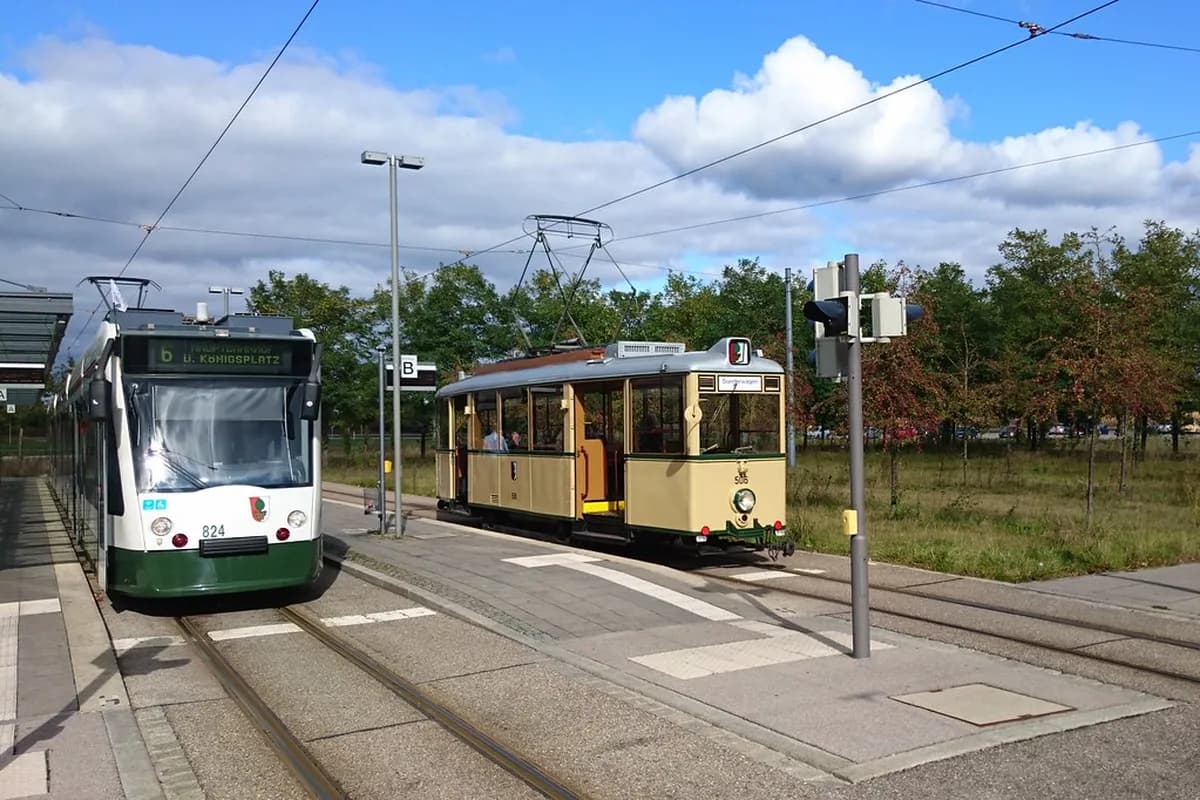
The short version: Augsburg's public transport is run by the AVV (Augsburger Verkehrsverbund) — seven tram lines plus a dense bus network, running roughly 04:30 to 00:30 daily, with night buses Thursday to Sunday. For a day of sightseeing, buy a Single-person Day Ticket (Tagesticket) for the Innenraum (zones 10–20) at €10.20 (2026) — it covers the whole city and the tram out to Königsbrunn, and pays for itself after roughly three rides. Travelling as a group? The Day Ticket adds just €3.60 per extra adult (up to four children under 14 ride free). One-off hop? A single ride is €2.10, and the central City-Zone is free between nine inner-city stops.
Almost everything you'll want sits on tram lines 1, 2, 3 and 6, which all funnel through Königsplatz — the central interchange a five-minute walk from the Rathausplatz. Validate every ticket before boarding (paper tickets stamp at the machine; app tickets are pre-validated), keep an eye on real-time boards or the meinAVV app, and you can skip a car entirely. The rest of this guide breaks down exactly which ticket to buy, which line goes where, and how to arrive from Munich Airport.
Free: The European City Transport Cheat Sheet
Airport-to-centre, the best ticket to buy, and the one local gotcha — for 5 European cities, plus the universal rules for trams, ferries, and parking.
Augsburg Tickets and Fares: What to Buy in 2026
The AVV uses numbered fare zones. Almost the entire city sits inside zones 10 and 20, sold together as the Innenraum — that single price stage covers the historic center, the main station, the Zoo, and even the tram extension to Königsbrunn. You only step up a zone when you head out to surrounding towns like Friedberg or Gersthofen. All prices below are valid from 1 January 2026.
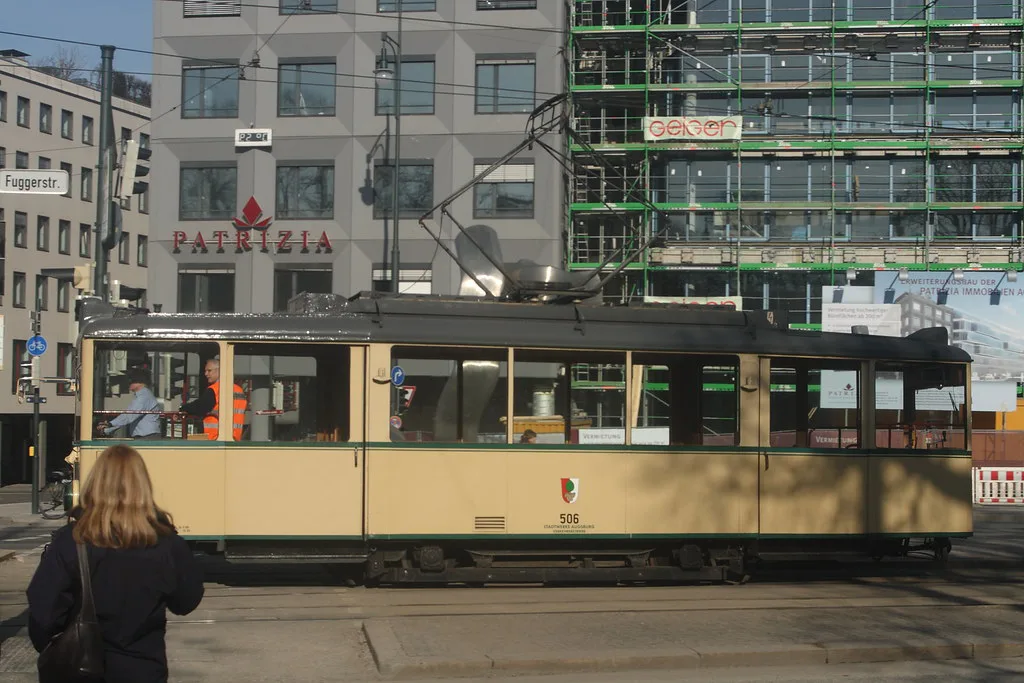
- City-Zone (free) — Travel at no charge between nine central stops, including Königsplatz and Rathausplatz. Perfect for hopping two or three stops in the old town.
- Single ticket (Einzelticket), 1 zone — €2.10 adult / €1.20 child (6–14). Valid for one continuous journey, no return.
- Strip card (Streifenkarte), 9 strips — €16.20 (or €15.40 in the meinAVV app); a short hop cancels one strip, a full Innenraum ride two strips. Good value if several people share occasional rides.
- Day Ticket (Tagesticket), 1 person, Innenraum — €10.20 for unlimited rides in zones 10–20 until 03:00 the next morning. The default choice for a sightseeing day.
- Day Ticket, group — base €10.20 plus €3.60 per additional adult; up to four children under 14 ride free. Two adults pay €13.80, a family of two adults plus kids pays the same €13.80.
- Day Ticket, all zones (10–98) — €20.50, only needed if you are day-tripping to outer towns by regional bus.
Buy from vending machines at every tram stop (card and contactless accepted, cash hit-or-miss), at the AVV service center inside Augsburg Hauptbahnhof, in the meinAVV app, or — buses only — from the driver. Paper tickets must be stamped in the on-board or platform validator before you ride; inspectors are frequent and the fine is €60. If you already hold a Deutschland-Ticket (€58/month nationwide), it is valid on every AVV tram and bus, so skip buying anything extra.
| Ticket (2026) | Price (adult) | Coverage | Best for |
|---|---|---|---|
| City-Zone | Free | 9 central inner-city stops | Hopping 2–3 stops in the old town |
| Single (Einzelticket), 1 zone | €2.10 | One continuous journey, no return | A single one-off ride |
| Strip card (Streifenkarte), 9 strips | €16.20 (€15.40 in app) | 2 strips per full Innenraum ride | Occasional rides shared by a few people |
| Day Ticket (Tagesticket), 1 person | €10.20 | Unlimited zones 10–20 until 03:00 | A full sightseeing day (default pick) |
| Day Ticket, all zones (10–98) | €20.50 | City + outer towns by regional bus | Day-tripping to Friedberg/Gersthofen etc. |
| Bayern-Ticket | €29 (+€10/extra adult) | All Bavaria regional rail + local AVV | Combining the Munich journey with local travel |
Tram Lines, Buses, and Night Service
The tram (Straßenbahn) is the backbone of the network, and four of the seven lines do almost all the visitor work. Trams and buses run from roughly 04:30 to 00:30 daily, every 5–10 minutes in the daytime and every 15 minutes in the evening. Königsplatz is the central interchange where lines 1, 2, 3, and 6 cross.
- Line 1 (Lechhausen ↔ Göggingen / Inningen) — runs through the center past the Fuggerei stop and along the Lech; your line for the old town's east side.
- Line 2 (Augsburg West ↔ Haunstetten) — passes the Cathedral, Mozarthaus (Frauentorstraße stop) and skirts the Siebentischwald forest to the south.
- Line 3 (Stadtbergen ↔ Königsbrunn) — the extended southern line, a direct ~30-minute ride from the center to Königsbrunn.
- Line 6 (Friedberg West ↔ Hauptbahnhof / Schäfflerbach) — links the Schaezlerpalais (Ulrichsplatz), the tim textile museum, and continues east toward Friedberg.
Bus line 32 connects the Hauptbahnhof to the Zoo and Botanical Garden in about 15 minutes. From Thursday through Sunday the AVV runs additional night buses through the small hours, giving Augsburg effectively round-the-clock (reduced) coverage on weekends — handy after a late dinner or a match. There is no metro or S-Bahn within the city; regional trains (RB/RE) handle the longer reaches to Gessertshausen, Langweid, and beyond.
Getting to Augsburg: Munich Airport and Trains
Augsburg has no commercial airport of its own; nearly everyone arrives via Munich Airport (MUC) or by mainline train. There is no direct rail link from the airport, so the route runs through Munich's main station.
- From Munich Airport — Take the S-Bahn S1 or S8 to München Hauptbahnhof (about 45 minutes), then a regional (RB/RE) or ICE train on to Augsburg Hbf. The train leg is 30–45 minutes; allow around two hours door to door including the connection.
- From Munich city — Regional trains and ICEs run several times an hour to Augsburg in 30–45 minutes, making Augsburg an easy day trip from Munich. If you are driving in from the west instead, nearby Ulm is the next major stop on the line, and our guide to parking in Ulm covers where to leave the car before continuing by rail.
- Bayern-Ticket — €29 for one person, plus €10 per extra adult (up to five total). It covers all regional trains across Bavaria and local AVV trams and buses for the day, valid from 09:00 on weekdays (00:00 weekends) until 03:00 the next morning — the cheapest way to combine the journey with a day of local sightseeing.
Augsburg Hauptbahnhof sits a short tram ride (or 10-minute walk) from the old town, and every major tram line stops there, so you can buy your AVV ticket and be at Königsplatz within minutes of stepping off the train.
Must-See Augsburg Attractions
The Fuggerei is a top priority for most travelers using Augsburg public transport. As the world's oldest social housing complex, it remains a living piece of history. Take tram line 1 toward Lechhausen to reach the dedicated Fuggerei stop. Walking from the central Rathausplatz also takes less than ten minutes.
The Perlachturm and the Golden Hall in the Town Hall dominate the skyline. These landmarks sit right at the heart of the city's transit hub. Almost every major tram line passes through the nearby Moritzplatz or Rathausplatz. Check the augsburg-tourismus.de site for current opening hours of the tower.
Augsburg Cathedral is another essential stop for those interested in medieval art. It houses the oldest stained-glass windows in Germany, dating back centuries. Tram line 2 drops you very close to the northern entrance of the cathedral. This area is also part of the city's unique water management system heritage.
Museums, Art, and Culture in Augsburg
Art lovers should head to the Schaezlerpalais to view its magnificent ballroom. This rococo palace is easily reached via tram lines 2, 3, or 6. Exit at the Ulrichsplatz stop and walk a short distance south. The museum often hosts temporary exhibitions alongside its permanent collection.
The Mozarthaus celebrates the father of Wolfgang Amadeus Mozart, who was born here. Located in the northern part of the old town, it is served by tram line 2. Get off at the Frauentorstraße stop to find the museum entrance. Interactive displays make this a great choice for music enthusiasts.
The State Textile and Industry Museum, known as tim, offers a look at industrial history. It occupies a former spinning mill and is accessible via tram line 6. Many visitors find this museum more engaging than traditional art galleries. Consult our public transport guides for similar industrial heritage routes.
Parks, Gardens, and Outdoor Spots in Augsburg
The Botanical Garden and the Augsburg Zoo are located right next to each other. Bus line 32 provides a direct connection from the main railway station. The journey takes about 15 minutes and runs frequently throughout the day. Families often spend a full afternoon exploring these expansive green spaces.
For a more natural experience, the Siebentischwald offers miles of shaded trails. This forest serves as the city's 'green lung' and is popular for cycling. Tram line 2 toward Haunstetten Nord provides several access points along the park. It is a perfect spot to escape the urban bustle for an hour or two.
The Lech river banks provide scenic paths for walking and relaxing. You can reach various points of the river using tram line 1 or 6. Locals often gather here during summer evenings for picnics. The river is also a key part of the city's historic canal system.
Family-Friendly and Budget-Friendly Options in Augsburg
Traveling with a family can be affordable if you use the right tickets. The AVV offers day tickets that cover up to five people at a flat rate. Children under six usually travel for free on all city lines. Always validate your ticket before boarding to avoid heavy fines.
The 'City-Zone' is a fantastic budget feature for short trips. You can travel for free between nine central stops in the inner city. This zone includes major points like Königsplatz and Rathausplatz. It helps visitors save money while moving between central attractions.
Augsburg is much more affordable than nearby Munich for dining and stays. Look for bakeries and small cafes near the university for the best prices. Using the tram to reach outer neighborhoods can reveal hidden culinary gems. Many budget hotels are located near the main station for easy transit access.
- AVV Day Ticket (TagesTicket)
- Type: Group or Single
- Best for: Unlimited city travel
- Where: Ticket machines/App
- Cost: Approx 7-15 Euro
- Bayern-Ticket (Bavaria Ticket)
- Type: Regional rail pass
- Best for: Day trips
- Where: DB machines
- Cost: Starts at 29 Euro
How to Plan a Smooth Augsburg Attractions Day
Start your day at Königsplatz, the central hub for all tram lines. The digital displays here show real-time departures for every direction. Download the AVV.mobil app to check schedules on the go. Planning your route in advance prevents confusion at busy intersections.
Avoid traveling during the morning rush between 7:30 and 8:30 AM. Trams can become very crowded with students and commuters. Mid-morning is the ideal time to start your sightseeing journey. Most museums open around 10:00 AM, matching this transit window.
If you plan to visit multiple cities, consider a Regional day ticket for Bavaria. This ticket allows you to use all regional trains and local transit. It is particularly useful if you are staying in Munich and visiting Augsburg, or pairing the trip with another Bavarian city like nearby Regensburg and its public transport network. Similar passes are discussed in our guide to Colmar public transport options.
Oberschönenfeld: Swabia Museum and Nature Park
Oberschönenfeld is a peaceful destination located just west of the city. Take a regional train from Augsburg Central to the Gessertshausen station. From there, a short bus ride or a 20-minute walk leads to the abbey. The Swabian Folklore Museum is the main cultural draw in this area.
The Nature Park Haus provides excellent information on local flora and fauna. It is a great educational stop for children and nature enthusiasts. Several circular hiking trails start right from the monastery grounds. These paths are well-marked and vary in difficulty for all walkers.
The monastery bakery is famous for its traditional sourdough bread. Visitors often queue up early to buy a fresh loaf. Enjoying a snack in the beer garden is a classic local experience. Check the bus return times carefully as they are less frequent on weekends.
Königsbrunn: Nature Museum and Knightly Battle
Königsbrunn has become much easier to reach thanks to the tram extension. Tram line 3 now runs directly from Augsburg city center to Königsbrunn. The journey takes about 30 minutes through the southern suburbs. It is a cost-effective way to explore beyond the immediate city limits.
The Mercateum is a unique museum housed inside a giant globe. It focuses on the history of trade and the famous Fugger family. Nearby, the Nature Museum offers insights into the Lechfeld landscape. The area is also famous for the historic Battle of Lechfeld.
Walking through the heathlands provides a sense of the region's ancient geography. Rare orchids and insects thrive in this protected natural habitat. Bring sturdy shoes if you plan to explore the unpaved trails. The tram ride back offers a relaxing view of the Bavarian countryside.
Langweid: Historical Power Plant and the Lech Museum
Langweid is home to one of the oldest hydroelectric plants in the region. The Lech Museum is located inside this beautifully preserved industrial building. Catch a regional train heading north toward Donauwörth to reach Langweid. The station is a short walk from the museum and the canal.
The museum explains how water power fueled Augsburg's industrial rise. Interactive models show the mechanics of turbines and water flow. This site is a key component of the UNESCO World Heritage designation. It is often less crowded than the central city attractions.
The canal paths near Langweid are perfect for a flat, easy walk. You can see the intricate system of locks and weirs in action. Cycling from Augsburg to Langweid is also a popular day activity. Return transit is frequent, making it a low-stress excursion.
Friedberg: Palace and Historic Alleyways
Friedberg sits on a hill overlooking the Lech valley just east of Augsburg. Tram line 6 is the most convenient way to reach this charming town. The ride ends at the foot of the hill, requiring a short climb. The historic old town is filled with colorful facades and narrow streets.
The Wittelsbach Palace is the architectural highlight of the town. It houses a museum dedicated to local history and clockmaking. Friedberg was once a world-renowned center for high-quality timepieces. The palace grounds offer a quiet place for a stroll.
Many travelers enjoy the panoramic views of Augsburg from the town walls. Sunset is a particularly beautiful time to visit the fortifications. Local cafes in the central square serve excellent Bavarian pastries. The transit connection makes it easy to return for dinner in Augsburg.
Frequently Asked Questions
Which Augsburg public transport options fit first-time visitors?
First-time visitors should primarily use the tram network, especially lines 1 and 2. These lines connect the main station to major sights like the Fuggerei and the Cathedral. For a broader view, check our public transport guides to master the AVV system efficiently.
How much time should you plan for Augsburg public transport?
Most central trips take between 5 and 15 minutes. If you are heading to outer districts like Königsbrunn, allow 30 to 45 minutes for travel. The system is punctual, but checking the app for real-time updates is always recommended for a smooth trip.
What should travelers avoid when planning Augsburg public transport?
Avoid boarding without a validated ticket, as inspectors frequently check passengers. Do not rely solely on cash for tickets, as many machines now prefer cards or app payments. Also, try to avoid the peak morning rush to ensure a more comfortable seat on the tram.
Is Augsburg public transport worth including on a short itinerary?
Yes, the transport system is highly efficient and saves significant time on a short trip. It allows you to visit distant spots like the Zoo or Botanical Garden without the hassle of parking. For those on a tight schedule, the free 'City-Zone' is especially valuable.
Mastering the Augsburg public transport system unlocks the full potential of your visit. From the historic city center to the quiet trails of Oberschönenfeld, transit makes exploration easy. Remember to choose the right ticket type to maximize your travel budget. The city's commitment to efficient transit ensures a pleasant experience for every traveler.
Whether you are here for the Roman history or the modern art, the AVV network is ready. Take time to enjoy the scenic rides through the Bavarian countryside on regional lines. Augsburg continues to be a leader in sustainable and accessible urban mobility. Enjoy your journey through one of Germany's most fascinating and historic cities.
Free: The European City Transport Cheat Sheet
Airport-to-centre, the best ticket to buy, and the one local gotcha — for 5 European cities, plus the universal rules for trams, ferries, and parking.
You might also like

Continue reading
More guides you'll find useful