
Strasbourg Tram: How to Use It (Tickets, Routes & Tips)
Master the Strasbourg tram system with our guide on buying tickets, navigating the Homme de Fer hub, and traveling to Kehl, Germany.
 By Marco Bellini
On this page
Strasbourg Tram: How to Use It
TL;DR (2026): Buy a ticket at the platform kiosk or the CTS app, validate it on the yellow platform post before boarding (not on the tram), and you're set. A single trip is €1.90 (valid 1 hour, transfers included); the best-value all-day option is the 24h Solo at €4.60, or the 24h Trio for two to three people. Six lines (A–F) run roughly 4:30am–12:30am, and Line D crosses into Kehl, Germany on the same standard ticket. Below, the full how-to.
I first navigated the Strasbourg tram network during a rainy December evening, quickly learning that the system is the city's true heartbeat. With its sleek futuristic cars and silent tracks, the CTS (Compagnie des Transports Strasbourgeois) network makes exploring Alsace's capital incredibly seamless. This guide, updated for 2026, helps you avoid common tourist traps like validation fines or getting lost at the central hub. Whether you are heading to the historic Petite France or crossing the border into Germany, mastering the tram is essential for any visitor.
Our 11pm arrival once meant we barely caught the last Line A tram toward the city center, illustrating the importance of timing. The network consists of six lines, labeled A through F, which crisscross the city and connect major landmarks with surgical precision. Walking is lovely, but the tram saves your feet when traversing the long distances between the European Parliament and the central station. This guide breaks down every logistical hurdle, from purchasing your first ticket to understanding the complex intersection at Homme de Fer.
Strasbourg Tram System Overview
The Strasbourg light rail guide typically highlights the system's reputation as one of the most extensive and efficient in France. Operating six distinct lines, the network serves the entire Eurometropolis, reaching deep into suburban residential areas and even neighboring countries. Most visitors will find themselves frequently using Lines A and D, which connect the Gare Centrale to the historic island. Trams run on dedicated tracks, meaning they are never delayed by the city's often congested narrow streets.
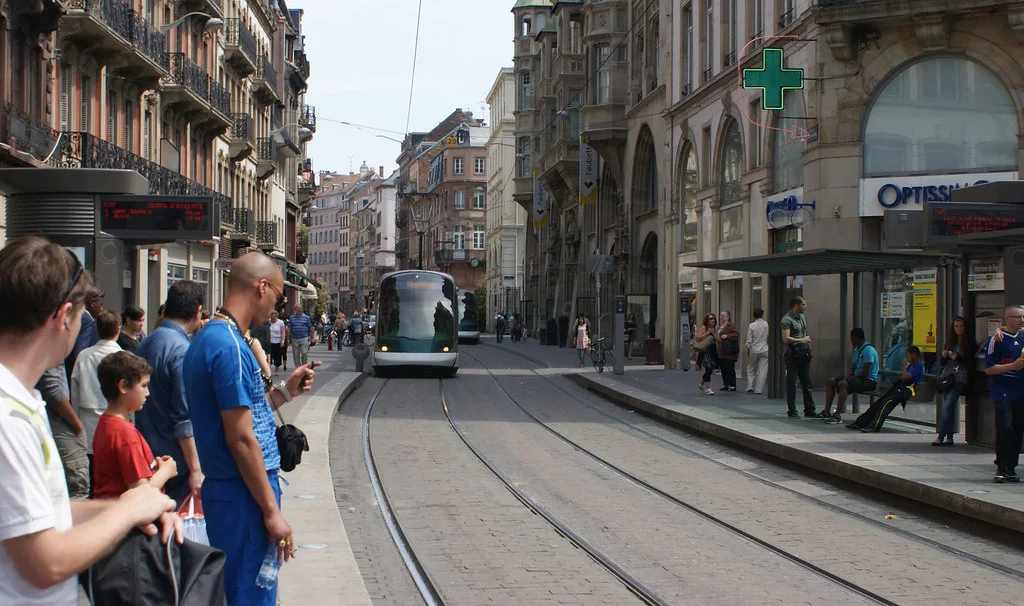
Quick Answer: The best default option for most travelers is the 24h Solo ticket at €4.60 / ~$5.00, providing unlimited rides. Groups of two or three people should instead choose the 24h Trio ticket for €7.00 / ~$7.60 to save significantly. A single journey costs €1.90 / ~$2.10 and is valid for one hour, including transfers between different lines.
The system is remarkably punctual, with digital displays at every station showing real-time arrival countdowns for the next two vehicles. During the famous Christmas Market, certain central stations like Broglie may close for security, requiring a short walk from nearby stops. Always check the latest travel updates if you are visiting during major festivals or public holidays. The sleek, low-floor design of the cars makes them exceptionally accessible for those with strollers or heavy luggage.
Step-by-Step: How to Use the Tram in Strasbourg
Learning how to use the tram in Strasbourg requires understanding one golden rule: validation happens before you step onto the vehicle. Unlike many other European cities where you tap inside the car, Strasbourg uses platform-based yellow posts for all physical tickets. Forgetting this step is the most common reason tourists receive heavy fines during random ticket inspections by CTS agents. Follow these specific steps to ensure a smooth, legal journey across the city and into the suburbs.
- Step 1: Locate a ticket kiosk at any station
- Most platforms feature large multi-language touch-screen machines that accept coins and major international credit cards.
- Expect to spend about 2 minutes navigating the menu to select your desired fare type.
- Avoid kiosks at Gare Centrale during morning rushes as lines can become quite long and frustrating.
- Step 2: Purchase and collect your paper ticket
- A single trip currently costs €1.90 / ~$2.10, while a 24-hour pass offers better value for multiple trips.
- Tickets are printed on small cardboard cards with a magnetic strip or a chip for contactless scanning.
- Check that your change is dispensed correctly before walking away from the machine to your boarding area.
- Step 3: Validate your ticket on the platform post
- Look for the bright yellow or grey pillars located near the station entrance or along the platform.
- Hold your ticket against the reader until it beeps or stamps, which takes only a split second.
- Failing to do this before boarding can result in a fine of over €50 / ~$55 even with a paid ticket.
- Step 4: Check the direction on the digital display
- Overhead signs list the final destination of the next tram to help you choose the correct platform side.
- Trams usually arrive every 6 to 10 minutes during the day, so you rarely have to wait long.
- Verify the line letter (A-F) matches your intended route on the system map displayed at the station.
- Step 5: Board and move away from the doors
- Wait for passengers to exit before stepping onto the low-floor car, which is level with the platform.
- The journey from the station to the city center takes approximately 5 to 8 minutes door-to-door.
- Keep your validated ticket easily accessible in case a plain-clothes inspector asks to see your proof of payment.
How to Buy Tickets and Fare Options
The CTS Strasbourg app is the most convenient way to manage fares if you have a reliable mobile data connection. It allows you to buy digital tickets directly on your phone, which you then validate via NFC or QR code. Physical kiosks remain the standard for most, though they occasionally struggle with non-EU credit cards that lack 3D Secure verification. If your card is rejected, look for a nearby 'Tabac' shop which often sells basic tickets for cash.
Travelers staying for several days should consider the Strasbourg City Card for integrated discounts on museums and boat tours. While the card itself doesn't always include free transport, you can load a 3-day pass onto it at a discount. For those visiting from other French cities, similar systems like the Montpellier tram use different apps, so download the CTS version specifically. A 'Short Trip' ticket is available for just 3 stops or fewer, costing only €1.10 / ~$1.20 for quick hops.
The 24h Trio ticket is a hidden gem for families or small groups of friends traveling together. It covers two to three people for a full 24 hours and works out far cheaper than three separate 24h Solo tickets. Always remember that 24-hour tickets are valid from the moment of first validation, not the time of purchase. One thing to note: if you buy a single from the bus driver instead of a kiosk it costs €2.50 rather than €1.90, so always buy at the platform machine before you ride.
| Ticket | Price (2026) | Best for | Validity |
|---|---|---|---|
| Short Trip (≤3 stops) | €1.10 / ~$1.20 | Quick hops | One short ride, no transfers |
| Aller Simple (single) | €1.90 / ~$2.10 (€2.50 on board) | One-off journeys | 1 hour, transfers included |
| 24h Solo | €4.60 / ~$5.00 | A full day of sightseeing | 24h from first validation |
| 24h Trio | 2–3 people, one shared pass | Couples & small groups | 24h from first validation |
| Park+Ride (P+R) | ~€4.20 / ~$4.60 | Arriving by car | All-day parking + return tram for the car's passengers |
Understanding the Network Map and Main Lines
Navigating the Homme de Fer central hub can be intimidating because five of the six tram lines intersect here. The station is shaped like a large circle with tracks entering from four different directions under a glass canopy. Pay close attention to the floor markings and overhead signs to find the specific platform for your connecting line. If you get turned around, the Place Kléber is just steps away and serves as an easy landmark for orientation.
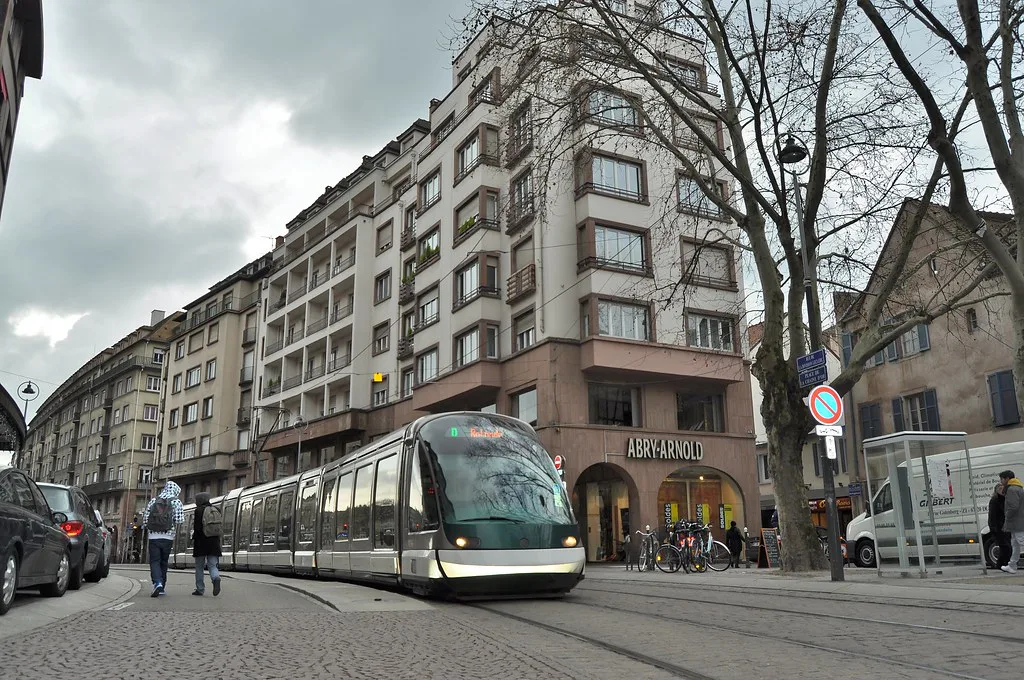
Line A and Line D are the primary routes for tourists arriving at the Gare Centrale railway station. They both run through the center toward Langstross Grand'Rue, which is the best stop for exploring the Cathedral area. Line E is unique because it bypasses the very center, connecting the European Institutions directly to the southern residential districts. Maps are available at every stop, but downloading a PDF from Visit Strasbourg is a smart backup.
The network layout is designed so that almost any point in the city center is within a 500-meter walk of a stop. Bicycles are permitted on the tram except during peak rush hours (7am-9am and 5pm-7pm) to keep space for commuters. If you are heading to the Parc de l'Orangerie, take Line E to the Droits de l'Homme stop for a scenic walk. The system is much easier to navigate than the multi-modal Alicante tram due to its compact city-center core.
Going to and from Kehl by tram
Taking Line D across the Rhine River into Kehl, Germany, is one of the most popular short excursions for visitors. The tram glides over a dedicated bridge, offering beautiful views of the river and the Two Shores Garden. Standard CTS tickets are valid all the way to the Kehl Rathaus stop, meaning no special international fare is required. This cross-border journey takes about 15 minutes from the Strasbourg city center and runs every 12 to 15 minutes.

Your mobile phone will likely switch from a French to a German network provider as you cross the bridge. Ensure your roaming is active if you are relying on the CTS app for your digital ticket validation. The tram stops at Kehl Bahnhof, which is perfectly situated for those wanting to explore the German rail network. Be aware that while the ticket is valid, German shops in Kehl may have different opening hours than those in France.
Police occasionally conduct random passport checks on the tram as it crosses the international border between France and Germany. Always carry a valid ID or passport, even though the Schengen area usually allows for free and open movement. The Kehl Rathaus terminus is located right in the pedestrian shopping zone, making it very convenient for a quick lunch. This extension is a marvel of modern engineering and a symbol of the close ties within the European Union.
Schedules, Frequency, and Operating Hours
Trams in Strasbourg generally begin their service around 4:30 am and continue running until approximately 12:30 am. During the day, you can expect a tram every 6 minutes on the main central sections where lines overlap. On Sundays and public holidays, the frequency drops to one tram every 12 to 15 minutes on most lines. Check the digital boards at the station, as they are very accurate regarding the 'temps d'attente' or waiting time.
Late-night travelers should be cautious, as the frequency thins out significantly after 11:00 pm on weekdays. If you miss the last tram, the 'Hibus' night bus service covers some of the main tram corridors on weekend nights. The Grenoble tram follows a similar late-night pattern, but Strasbourg is generally safer for late-night solo travel. Always verify the last departure time for your specific line on the official CTS website before heading out for dinner.
Park&Ride: Combining Car and Tram Travel
The Park and Ride (P+R) system is the most efficient way to visit the city center if you are arriving by car. For a flat fee of approximately €4.20 / ~$4.60, you get a full day of parking and a return tram ticket. This ticket is valid for all passengers in the vehicle, up to a maximum of seven people, making it a steal. Major lots like Elsau and Rotonde are located right next to the highway exits for easy access.
You must validate your P+R ticket at the tram station before boarding, just like a regular paper ticket. The parking lots are open 24 hours a day, but the inclusive tram ticket only works during normal operating hours. Avoid leaving valuables in your car, although these lots are generally well-lit and monitored by cameras. This system is much cheaper than paying for hourly street parking, which is limited and expensive in the historic center.
Accessibility, Bikes, and Traveling with Pets
Every CTS tram uses 100% low-floor cars that sit level with the platform, so there is no step up when boarding — ideal for wheelchairs, walkers, rollators, and strollers. Each car has clearly marked priority spaces near the central doors, and the wide platforms make rolling on and off effortless. For door-to-door trips, CTS also runs a dedicated reduced-mobility service (Mobistras) that must be booked in advance.
Bikes are welcome on the tram but only outside peak hours — they are not allowed from 7am–9am and 5pm–7pm Monday to Saturday, while Sundays and public holidays are unrestricted. Folding bikes (when folded) and the city's Vélhop rental cycles count as regular luggage and can travel any time. Small pets in a carrier ride free; larger dogs must be leashed and muzzled and travel at the driver's discretion. There is no extra ticket for a bike or a pet — your normal validated fare covers you.
Troubleshooting Common Tram Problems
A common issue occurs when the ticket kiosk refuses to accept a foreign credit card during the checkout process. If this happens, try a different machine or use the contactless 'Tap to Pay' feature if your card supports it. Many stations now have smaller readers where you can simply tap your bank card to pay for a single fare. Always wait for the green light on the reader to confirm your payment was successful before boarding the vehicle.
- Ticket validation error on the platform
- If the yellow post flashes red, your ticket might be empty or damaged.
- Try a different validation post on the same platform before assuming the ticket is faulty.
- Take the ticket back to the kiosk or a CTS boutique if it consistently fails to read.
- Missing the last tram of the night
- Check for the 'Hibus' night bus stops which are usually located near major tram intersections.
- Use a ride-sharing app like Uber as a backup, though they can be scarce after midnight.
- Walking from the center to Gare Centrale takes about 15 minutes if you are stranded.
- Tram bypasses your stop unexpectedly
- This usually happens during the Christmas Market or due to technical maintenance on the tracks.
- Listen for audio announcements in French and English which explain the temporary route change.
- Look for 'Navette' buses that are often deployed to cover the closed sections of the line.
- Lost items on the vehicle
- Contact the CTS lost and found office located near the Alt Winmärik stop.
- Report your lost item online through the official website as soon as possible.
- Expect a small processing fee if your item is found and held for collection.
- App failing to load digital tickets
- Ensure your phone's NFC setting is turned on for contactless validation to work correctly.
- Keep a screenshot of your purchase receipt in case the app crashes during an inspection.
- Restart the app or your phone if the QR code fails to display on the screen.
Frequently Asked Questions
How do I pay for the tram in Strasbourg?
You can pay using ticket kiosks at every station with cash or cards. Alternatively, use the CTS mobile app or tap your contactless credit card directly on the platform readers. Always validate before boarding.
Can you buy tram tickets on the tram in Strasbourg?
No, you cannot buy tickets once you are inside the tram. All tickets must be purchased and validated at the platform stations. Failure to do so may result in a fine from inspectors.
Does the Strasbourg tram go to Germany?
Yes, Line D connects Strasbourg directly to Kehl, Germany. The journey takes about 15 minutes and uses standard CTS tickets. It is a very popular route for cross-border shopping and sightseeing.
Mastering the Strasbourg tram system is the key to unlocking the best of this Franco-German gem. By remembering to validate on the platform and choosing the right 24-hour pass, you save both money and stress. The network is clean, safe, and incredibly reliable for travelers of all ages. Enjoy your journey through the cobblestone streets and over the Rhine River!
You might also like


Continue reading
More guides you'll find useful